The Conservation Estate: How Affluent American Families Are Transforming Premium Lakefront Acquisitions Into Ecological Legacies
The language of luxury real estate has long trafficked in superlatives: the finest views, the most exclusive addresses, the rarest parcels. What is less frequently discussed — but increasingly relevant to the most thoughtful buyers in America's premium lakefront markets — is the language of responsibility. Of legacy. Of what, precisely, a family intends to leave behind.
A meaningful and growing segment of ultra-high-net-worth purchasers is approaching lakefront acquisition through an entirely different lens. For these buyers, the property's ecological condition is not merely a disclosure item to be reviewed and accepted. It is the central subject of the acquisition itself.
Acquisition as Ecological Intervention
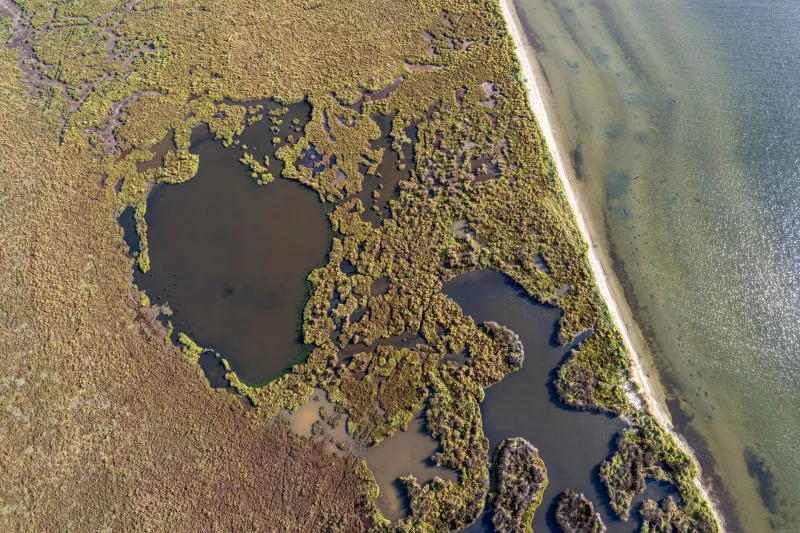
Across the premier freshwater markets of the United States — including the Finger Lakes of New York, the chain lakes of northern Wisconsin, the glacially carved shorelines of Maine, and the storied reaches of Lake Tahoe — families of significant means are identifying and acquiring degraded or vulnerable waterfront parcels specifically because of their restoration potential.
The logic is not sentimental, though sentiment is certainly present. It is strategic. A degraded shoreline, improperly managed for generations, represents an opportunity: the chance to return an ecologically significant piece of American landscape to something closer to its original condition, and to attach one's family name to that transformation permanently.
Conservation organizations including The Nature Conservancy, the Trust for Public Land, and numerous regional land trusts have noted a marked increase in partnership inquiries from private family buyers over the past several years. These buyers arrive at the table not as passive philanthropists writing a check, but as active co-stewards with specific restoration objectives, professional advisors, and multi-decade time horizons.
The Dual-Purpose Estate
What distinguishes the conservation estate from a standard charitable land donation is its fundamental duality. These properties are not being surrendered to public management. They are being held, inhabited, and actively managed by the families who acquire them — with conservation outcomes built into the ownership structure from the outset.
A typical configuration might involve the acquisition of a substantial lakefront parcel — frequently several hundred acres, often including wetland buffers, upland forest, and direct shoreline — followed by the placement of a conservation easement on the ecologically sensitive portions of the land. The easement, typically held by a qualifying land trust or government entity, permanently restricts development on the protected areas while preserving the family's right to reside on and enjoy the estate.
The residential component of the estate is designed in deliberate harmony with the conservation mission. Structures are sited to minimize ecological disruption. Native plant restoration programs replace invasive species along the shoreline. Stormwater management systems are engineered to protect water quality. In the most ambitious programs, the estate becomes a functioning demonstration of what thoughtful private stewardship can accomplish at meaningful scale.
Wealth Planning Through Land
The financial architecture of the conservation estate is as carefully considered as its ecological program. Conservation easements on qualifying properties generate charitable deductions that, depending on the value of the development rights surrendered, can be substantial. For families managing significant estates — in the tax sense of that word — the deduction can represent a meaningful component of a broader wealth transfer strategy.
Beyond the immediate tax implications, the conservation estate offers a form of asset stability that is relatively rare in the luxury property market. Easement-protected land is, by definition, shielded from the development pressures that can transform the character of a lakefront neighborhood over time. The family that places its shoreline under permanent conservation protection is, in effect, purchasing the preservation of the landscape they acquired — not merely for their own tenure, but for every generation that follows.
Estate attorneys and wealth advisors who work with ultra-high-net-worth families note that the conservation estate has become an increasingly prominent component of legacy planning conversations. It satisfies multiple objectives simultaneously: it reduces taxable estate value, it anchors the family's philanthropic identity, and it creates a physical, inhabitable expression of the values the family wishes to transmit to its heirs.
The Philanthropic Dimension
Many conservation estate owners extend their stewardship beyond the boundaries of their own property. Watershed protection initiatives, for example, require coordination among multiple landowners and often involve significant private capital to execute effectively. Families with the resources and motivation to lead these initiatives find themselves in a position of considerable influence over the long-term ecological character of an entire lake system.
Partnerships with university research programs, state wildlife agencies, and national conservation organizations allow estate owners to leverage their private investment with institutional expertise and, in some cases, matching public funding. The estate becomes not merely a residential property with conservation attributes, but a node in a larger network of ecological restoration activity.
For families with children and grandchildren who will inherit both the property and the stewardship obligations attached to it, this network provides something of genuine value: a sense of purpose, a set of relationships, and a continuing mission that extends well beyond the management of financial assets.
A New Standard for the Exceptional Property
The conservation estate represents, in many respects, the most sophisticated expression of what lakefront property ownership can mean in contemporary America. It is a statement about permanence in an era of transience, about responsibility in an era of consumption, and about the kind of legacy that cannot be reduced to a financial balance sheet.
For buyers of this caliber, the question is no longer simply which lakefront property is the finest. It is which property offers the greatest opportunity to become something more than a residence — to become, in the fullest sense, a legacy.