Hidden in Plain Sight: Why America's Most Coveted Lakefront Estates Are Deliberately Disappearing
For generations, the waterfront estate operated by a simple and seductive logic: the grander the facade, the greater the prestige. Soaring rooflines, expansive glass walls, and manicured lawns rolling to the water's edge were the accepted grammar of lakefront luxury. Today, that grammar is being quietly rewritten by a cohort of ultra-wealthy buyers for whom visibility itself has become a liability.
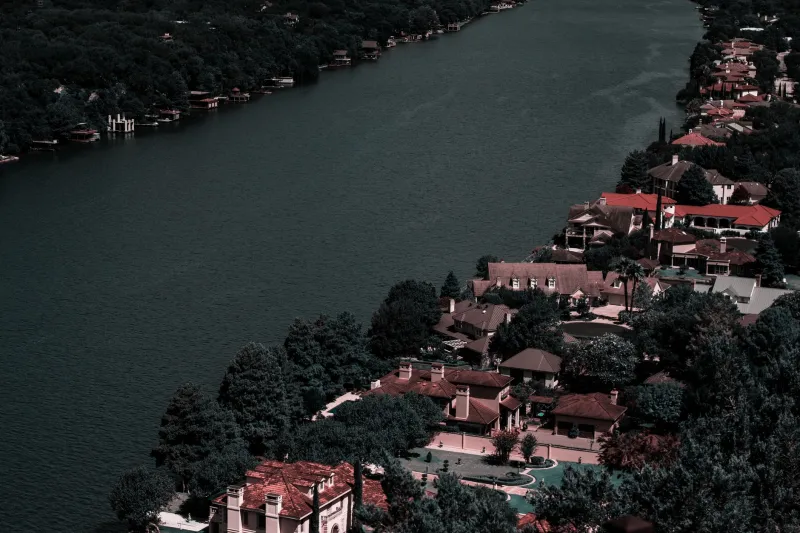
Across Lake Tahoe, Lake Geneva in Wisconsin, the Adirondack shoreline, and the storied reaches of Michigan's Gold Coast, the most coveted properties are increasingly the ones you cannot see from the water. This is not an accident. It is a strategy—and it is reshaping valuations in ways that surprise even seasoned real estate professionals.
The Ostentatious Mansion and Its Decline
The shift away from demonstrative waterfront architecture reflects a broader recalibration of what constitutes genuine affluence in twenty-first-century America. For buyers operating at the highest tier of the market—those acquiring properties priced well above eight figures—ostentatious design has come to signal something less than sophisticated. It speaks of wealth that needs an audience, of status that requires external validation.
Discerning buyers today are drawn to a different proposition entirely. They seek estates that reveal themselves gradually, that reward proximity and invitation rather than broadcasting their presence across open water. The psychological appeal is considerable: a home that cannot be easily observed cannot be easily coveted, catalogued, or compromised.
Brokers working in exclusive lake communities confirm that the language buyers use has shifted accordingly. Phrases such as "set back from the water," "naturally screened," and "privately sited" now carry a premium weight that "waterfront-facing" once commanded alone.
Strategic Landscaping as Architectural Intention
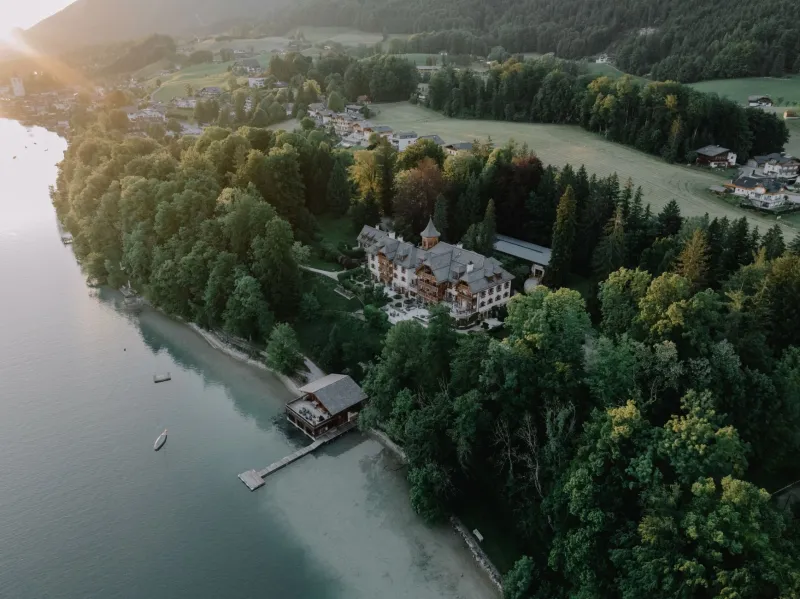
The concealment of a lakefront estate is rarely passive. In the most thoughtfully designed properties, the landscape itself becomes an instrument of deliberate privacy. Mature native plantings—stands of white pine, hemlock, and birch in northern lake regions; live oak and cypress along southern shores—are selected and positioned not merely for aesthetic effect but as functional screening from both the water and neighboring properties.
Landscape architects working with high-net-worth clients describe a design philosophy that inverts conventional lakefront thinking. Rather than clearing sightlines to the water, they are asked to create layered visual buffers that preserve the owner's view outward while eliminating the casual observer's view inward. Topographical grading, berm construction, and the strategic placement of boathouses and outbuildings all serve this dual purpose.
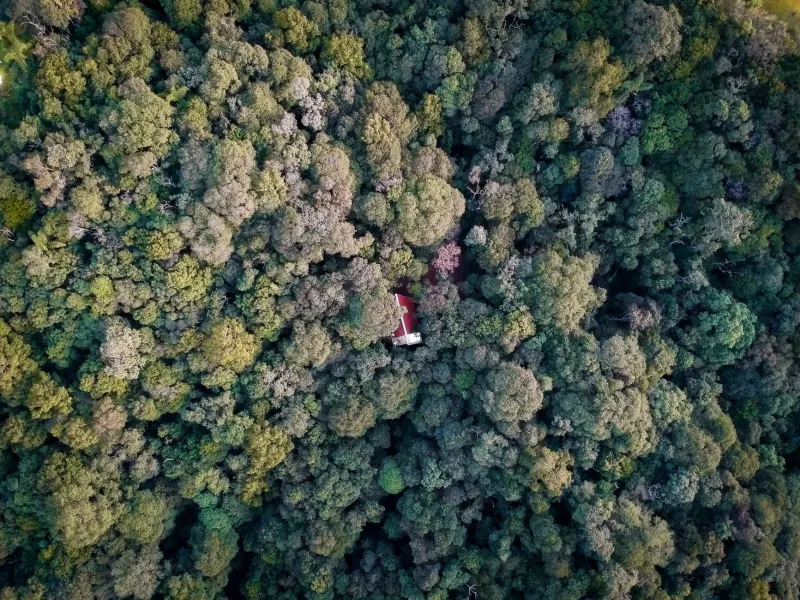
The result is an estate that exists in a kind of curated concealment—present on the shoreline, yet absent from it in any meaningful visual sense. For buyers who have spent careers operating at the intersection of public life and private ambition, this quality is not merely desirable. It is essential.
Architecture That Recedes
The structural choices that define this new generation of lakefront estates are equally deliberate. Where the prevailing aesthetic of the 1990s and early 2000s favored materials that announced themselves—pale limestone, reflective glass, white-painted timber—contemporary commissions increasingly favor finishes that absorb light rather than reflect it. Dark-stained cedar, weathered steel, and locally sourced stone in deep earth tones allow a structure to recede into its landscape rather than stand apart from it.
Rooflines are kept low and horizontal, hugging the terrain rather than rising above the treeline. Window placement prioritizes interior light and outward views while minimizing the visual footprint of the structure as seen from the lake. Some of the most compelling recent commissions incorporate living roofs and green walls that, over time, cause the built environment to merge seamlessly with the natural one.
Architects working in this idiom describe it not as minimalism in the conventional sense, but as a form of contextual intelligence—a recognition that the most powerful statement a lakefront estate can make is one of belonging rather than dominance.
The Security Dimension
Beyond aesthetics and philosophy, the movement toward visual restraint serves a profoundly practical function. For individuals of significant public profile—executives, founders, political figures, and their families—a property that cannot be easily identified from the water or a public road is a property that is materially more secure.
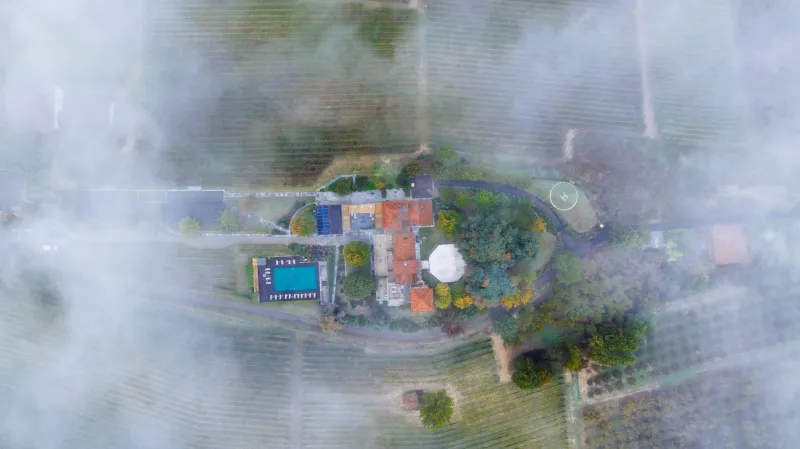
The proliferation of aerial photography, satellite mapping, and social media documentation has made conspicuous lakefront estates increasingly vulnerable to unwanted attention. A home that is, in effect, invisible to the casual observer presents a fundamentally different security profile from one that can be pinpointed by anyone with a smartphone and a boat.
Security consultants advising ultra-high-net-worth families now routinely incorporate architectural discretion into their recommendations, treating the visual concealment of a primary or secondary residence as a first line of defense rather than an afterthought.
The Paradox of Desirability
Perhaps the most counterintuitive dimension of this trend is its effect on property values. Conventional real estate logic suggests that visibility enhances desirability—that a home seen by many will be coveted by many and therefore command a premium. The data emerging from the most exclusive lake communities tells a more nuanced story.
Properties that offer genuine privacy, achieved through thoughtful siting, mature screening, and architecturally restrained design, are attracting disproportionate interest from qualified buyers. The scarcity of such properties—combined with the growing recognition among sophisticated buyers that privacy itself is a finite resource—is producing valuation premiums that rival those traditionally associated with prime water frontage.
In this sense, the hidden estate has become its own category of trophy property: not a home that impresses from the outside, but one that reveals its full measure only to those who have earned the invitation to enter.
What This Means for Buyers and Sellers
For buyers entering the lakefront market at the highest price points, the implications are clear. Properties that appear understated on initial inspection may represent the most sophisticated acquisitions available. The absence of visual drama is not a deficiency to be negotiated away—it may be the most valuable feature on the listing.
For sellers, the lesson is equally instructive. Investment in mature landscaping, architectural screening, and contextually sensitive design is not merely an aesthetic choice. It is a wealth-preservation strategy, one that positions a property favorably among a buyer pool that increasingly views discretion as the definitive marker of genuine luxury.
The lakefront estate that cannot be easily seen, it turns out, is precisely the one most worth finding.