Trophy Properties and True Wealth: Why Discerning Investors Are Turning to Exceptional Homes
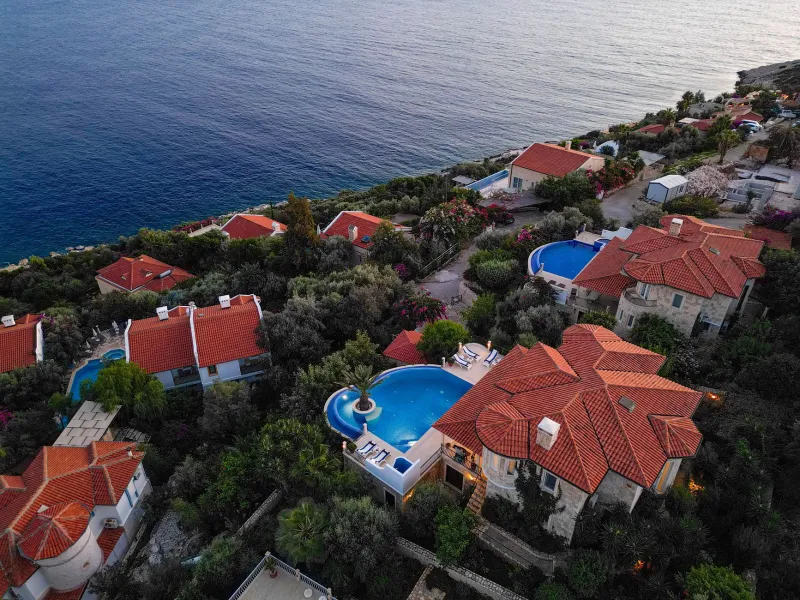
For generations, the acquisition of a magnificent estate has signaled arrival—a declaration of success rendered in stone, glass, and manicured grounds. Yet something meaningful has shifted in how America's most sophisticated wealth holders approach these transactions. Increasingly, the purchase of an exceptional residential property is less an act of personal celebration and more a deliberate financial strategy, one executed with the same rigor applied to private equity positions or fine art portfolios.
The question is no longer simply whether a home is beautiful. It is whether it is durable—financially, architecturally, and geographically—in ways that compound over time.
The Case for Residential Property as a Portfolio Pillar
Alternative investments have occupied an expanding share of ultra-high-net-worth portfolios over the past decade. Hedge funds, private credit, commodities, and collectibles have all attracted capital seeking diversification beyond public equities and fixed income. Within this landscape, luxury residential real estate occupies a particularly compelling position.
Unlike publicly traded REITs, which move in correlation with broader market sentiment, a well-selected private residence in a supply-constrained market tends to demonstrate what wealth managers describe as "low beta" behavior. During periods of equity market volatility, trophy properties in premier American enclaves—coastal California, the Hamptons, Palm Beach, and select mountain resort communities—have historically maintained or appreciated in value, providing a stabilizing counterweight to more liquid holdings.
The underlying logic is straightforward: exceptional land in exceptional locations cannot be replicated. A waterfront estate on Lake Tahoe or a historically significant compound in Montecito exists in finite supply. Population growth, domestic migration patterns, and the sustained concentration of wealth at the top of the income distribution continue to exert upward pressure on demand. Supply, by contrast, is structurally limited.
Reading the Market Beyond the Listing Price
Sophisticated buyers do not evaluate luxury properties on aesthetics alone. Real estate strategists who advise family offices and private wealth clients employ a layered analytical framework that begins well before a showing is scheduled.
Location resilience is the foundational variable. This encompasses not only the prestige of a given address today, but its defensibility against future headwinds: climate risk, infrastructure quality, tax policy trajectory, and demographic trends. A spectacular oceanfront villa in a jurisdiction with escalating property tax burdens and flood insurance complications may appreciate more slowly—or face greater carrying costs—than a comparable property in a more stable regulatory environment.
Architectural significance constitutes a second tier of evaluation. Homes designed by recognized architects—whether mid-century masters or contemporary luminaries—command a distinct premium and tend to attract a narrower but more committed pool of future buyers. Architectural provenance functions similarly to artist attribution in the fine art market: it establishes a category of scarcity that transcends square footage or amenity count.
Structural quality and capital expenditure forecasting round out the analytical picture. The most experienced buyers commission detailed pre-acquisition assessments that project maintenance and improvement costs across a ten-to-fifteen-year horizon. A property that appears undervalued at acquisition may carry concealed costs that erode net returns significantly.
Tax Considerations That Sophisticated Buyers Leverage
The tax architecture surrounding luxury residential real estate in the United States rewards patient, informed ownership in ways that are often underappreciated. Several mechanisms deserve particular attention.
The Section 121 exclusion permits married couples filing jointly to exclude up to $500,000 in capital gains from the sale of a primary residence, provided applicable ownership and use requirements are satisfied. For properties that appreciate substantially over a holding period, this exclusion represents a meaningful after-tax advantage relative to other appreciating assets.
For investment-classified properties—vacation homes or secondary residences managed as rentals—the 1031 exchange provision allows owners to defer capital gains taxation upon sale by reinvesting proceeds into a qualifying replacement property. Executed strategically across multiple transactions, this mechanism can facilitate substantial portfolio growth on a tax-deferred basis.
Step-up in basis rules further enhance the intergenerational wealth transfer proposition of exceptional real estate, allowing heirs to receive inherited properties with a cost basis reset to fair market value at the time of inheritance. For families with multi-decade holding horizons, this provision can effectively eliminate accumulated capital gains from the tax equation entirely.
Appreciation Patterns That Set Trophy Homes Apart
Not all luxury properties appreciate equally, and the divergence between the best-positioned estates and merely expensive homes has widened considerably in recent years. Research from several real estate analytics firms consistently identifies a cohort of "ultra-prime" properties—typically the top one to two percent of any given market by value—that outperform both the broader luxury segment and the general residential market over extended periods.
This outperformance is driven by several converging factors. The global mobility of wealth means that premier American properties compete for a buyer pool that extends well beyond domestic borders. International buyers, particularly from Canada, Western Europe, and parts of Asia, view top-tier U.S. residential real estate as both a lifestyle asset and a currency-diversification vehicle. This expanded demand base provides price support that more geographically parochial asset classes cannot access.
Additionally, the renovation and curation of exceptional homes—when executed with genuine taste and architectural sensitivity—can generate meaningful value accretion. Unlike speculative improvements in middle-market properties, thoughtful enhancements to a trophy estate often yield returns that approach or exceed their cost, particularly when they involve restoring original architectural features, integrating premium technology infrastructure, or expanding outdoor living capacity in markets where climate permits year-round use.
The Discipline Required to Invest, Not Simply Acquire
Perhaps the most important distinction between collecting exceptional homes as an investment discipline and simply purchasing expensive real estate lies in the rigor of the process. Emotional attachment—the pull of a spectacular view, the romance of a particular address—can cloud the financial calculus if left unchecked.
Wealth managers who advise clients on residential acquisitions frequently recommend establishing clear investment criteria before engaging with the market: target geographies, acceptable price-to-replacement-cost ratios, minimum holding periods, and exit strategy parameters. Treating the acquisition process with the same analytical discipline applied to any other asset class helps ensure that beauty and financial merit align, rather than compete.
At Villa du Lac, we believe that the finest homes in the world are not merely places to live. They are expressions of enduring value—architectural, geographic, and financial. For those who approach them with the appropriate seriousness, exceptional residential properties represent one of the most compelling alternative investments available to the discerning wealth holder.