The Healthy Home Reimagined: Inside the Wellness Architecture Revolution Transforming Luxury Residences
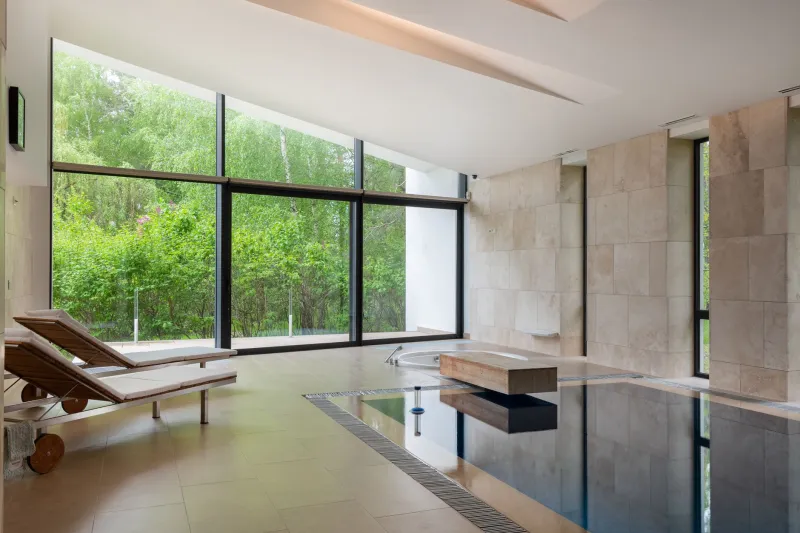
A new generation of luxury homebuyers is redefining what it means to live well, placing health, longevity, and sensory harmony at the center of residential design. From hospital-grade air purification systems to circadian lighting that mirrors the natural arc of sunlight, the most forward-thinking architects and developers across America are responding to a profound shift in how affluent clients conceive of home itself.
The era when a grand foyer and a chef's kitchen represented the pinnacle of residential aspiration has quietly given way to something more purposeful. Today's discerning buyer asks a different set of questions: How does this home support my sleep? Does the light here nourish or deplete me? Can I breathe more freely within these walls than outside them? These are not abstract concerns. They are the design brief of the modern luxury home.
The Biological Turn in High-End Residential Design
The wellness architecture movement did not emerge in isolation. It is the residential expression of a broader cultural reckoning with health—accelerated, in part, by the years Americans spent confined to their homes and acutely aware of indoor air quality, natural light, and the psychological weight of their immediate environment.
For luxury homebuyers, this reckoning translated quickly into purchasing criteria. According to research published by the Global Wellness Institute, the wellness real estate sector—defined as homes where health and well-being are central design considerations—has grown into a market valued at hundreds of billions of dollars globally, with North America representing the single largest share.
Architects who work at the upper end of the residential market report that wellness-related requests now appear in virtually every client conversation. What was once a specialized niche has become, in the words of one prominent Malibu-based designer, "the new baseline expectation."
Air, Light, and Water: The Invisible Foundations of a Healthy Home
The most sophisticated wellness homes begin with the elements that cannot be seen but are felt constantly: the quality of the air, the character of the light, and the purity of the water.
Whole-home air purification systems have evolved dramatically beyond the portable HEPA filters of a decade ago. Today's luxury installations integrate hospital-grade filtration directly into HVAC infrastructure, combining HEPA and activated carbon filtration with ultraviolet germicidal irradiation to neutralize particulates, volatile organic compounds, allergens, and pathogens. In wildfire-prone regions of California, Colorado, and the Pacific Northwest, these systems have become as essential as the structure itself.
Circadian lighting—perhaps the most elegantly invisible of wellness technologies—represents a significant leap in how architects think about artificial illumination. Systems such as Ketra and Lutron's Athena platform dynamically shift the color temperature and intensity of interior lighting throughout the day, closely mimicking the spectral transitions of natural sunlight. The result is an environment that supports the body's melatonin production cycles, promoting alertness during daylight hours and easing the transition to restorative sleep at night. In homes where this technology has been thoughtfully integrated, residents frequently describe a reduction in fatigue and an improvement in overall mood—outcomes that are increasingly documented in peer-reviewed research.
Water quality receives comparable attention. Whole-home filtration systems, structured water technologies, and dedicated hydrogen-infused water stations at kitchen fixtures are appearing with growing frequency in luxury new construction and high-end renovations across markets from the Hamptons to Hawaii.
Biophilic Design: When Nature Becomes the Architecture
If technology addresses the invisible dimensions of wellness, biophilic design attends to something equally profound: the deep human need for connection to the natural world. The term, derived from the work of biologist Edward O. Wilson, describes an approach to design that deliberately integrates natural materials, living systems, and the sensory qualities of the outdoors into the built environment.
In luxury residential practice, biophilic design manifests in forms both grand and intimate. At the grandest scale, it may take the shape of a home whose floor plan dissolves the boundary between interior and exterior—where retractable glass walls open an entire living pavilion to a private forest, or where a primary suite is oriented precisely to capture the morning light as it moves across a mountain range. At a more intimate scale, it appears in the selection of materials: raw-edge walnut countertops, hand-applied lime plaster walls, stone floors that carry the thermal memory of the earth.
Living walls—vertical gardens integrated into interior architecture—have moved from novelty to signature feature in the most ambitious wellness homes. When properly designed and maintained, these installations improve indoor air quality, regulate humidity, and introduce the kind of gentle, unpatterned visual complexity that research associates with reduced cortisol levels and enhanced cognitive restoration.
Natural light remains the most powerful biophilic tool available to any architect. Homes designed with deep attention to solar orientation, strategically positioned skylights, and light wells that carry daylight into the interior core offer occupants a fundamentally different daily experience than those built without such consideration.
Dedicated Wellness Spaces: Beyond the Home Gym
The home gym, long a staple of luxury residential amenities, has itself been reimagined. Where once a mirrored room with a treadmill and free weights sufficed, today's wellness-oriented buyer expects a far more comprehensive vision of physical and mental restoration.
The most thoughtfully designed luxury homes now incorporate dedicated spaces for cold therapy—cold plunge pools and cryotherapy chambers—alongside infrared saunas that operate at temperatures gentler than traditional Finnish models while penetrating more deeply into muscle tissue. Contrast therapy suites, which pair heat and cold exposure in a single dedicated environment, are appearing in high-end new construction from Aspen to Austin.
Meditation rooms and soundproofed contemplation spaces represent another category of growing demand. These are rooms designed with acoustic precision—surfaces chosen for their sound-absorbing properties, windows positioned to admit light without visual intrusion—that offer genuine sanctuary from the sensory noise of contemporary life.
Swimming pools, too, are evolving. Natural swimming pools, which filter water through planted biological zones rather than chemical treatment, are gaining traction among wellness-focused buyers who object to chlorine's impact on skin, respiratory health, and the broader ecosystem of a property. In climates that permit year-round use, these installations become central features of a home's wellness identity.
The Architects Shaping This Movement
The firms leading the wellness architecture conversation share a commitment to rigorous research alongside aesthetic ambition. Studios such as COOKFOX Architects in New York—whose work is grounded in biophilic principles and measurable occupant health outcomes—and the Los Angeles-based firm Marmol Radziner, known for integrating landscape and structure in ways that honor both human physiology and natural terrain, represent the intellectual vanguard of this movement.
Certification frameworks are emerging to bring rigor to what might otherwise remain a loosely defined aspiration. The WELL Building Standard, administered by the International WELL Building Institute, provides a comprehensive framework for evaluating residential and commercial environments across ten categories of human health, from air and water to mind, sound, and community. An increasing number of luxury homes are being designed and certified to WELL standards—a distinction that carries both intrinsic value and growing recognition in the resale market.
A New Measure of Luxury
At Villa du Lac, we have long believed that the most exceptional homes are those that elevate the lives lived within them. The wellness architecture movement represents perhaps the most meaningful expansion of that belief in a generation—a recognition that luxury, at its most profound, is not merely about beauty or scale, but about vitality.
The homes that will define this decade are those designed not only to impress, but to heal. Not only to shelter, but to restore. In that ambition, architecture finds one of its noblest purposes.