Beyond the Getaway: How America's Most Discerning Homeowners Are Engineering Seasonal Estates That Work as Hard as They Do
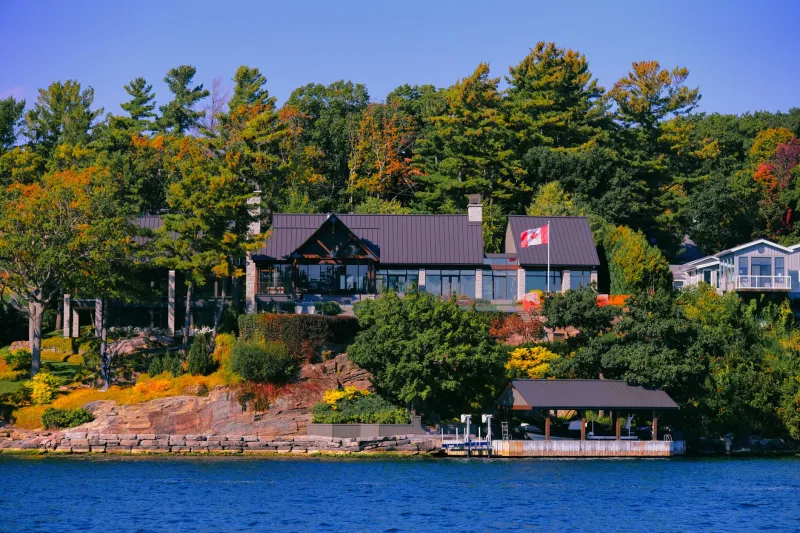
For generations, the American second home occupied a comfortable but largely passive role in the portfolios of the affluent. It was a destination — a lakefront refuge, a mountain lodge, a coastal retreat — valued primarily for the leisure it afforded and the memories it accumulated. The financial calculus was secondary, almost incidental. That era, for the most discerning segment of American homeowners, is quietly drawing to a close.
In its place has emerged something considerably more deliberate: the seasonal estate as a living investment. These are not vacation properties in any conventional sense. They are architecturally engineered, financially structured, and operationally managed residences designed to generate value — experiential, cultural, and economic — across every month of the year, whether or not their owners are in residence.
The Architecture of Intentional Seasonality
What distinguishes a truly exceptional seasonal estate from a sophisticated getaway begins long before the first stone is laid. The most forward-thinking architects and developers working at this level now speak openly of designing for what they call "temporal flexibility" — the capacity of a residence to shift its functional character in alignment with the natural rhythms of its location.
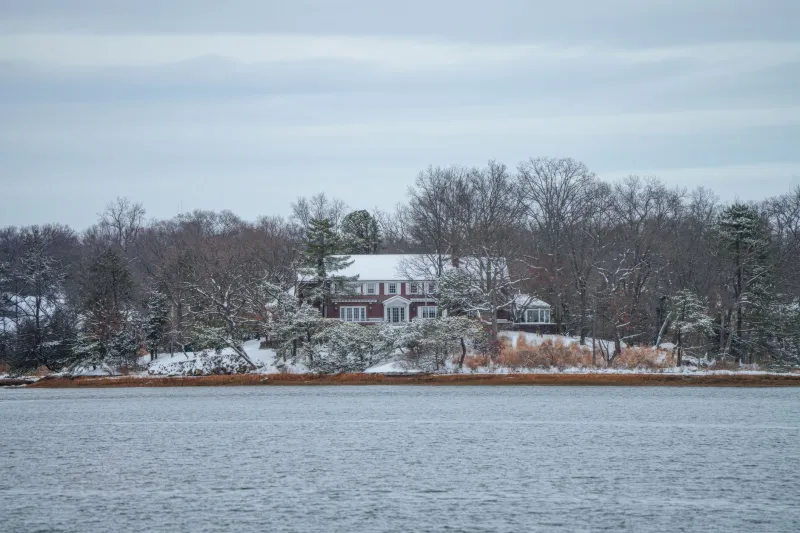
A lakeside estate in northern Michigan, for instance, might be conceived with expansive glazed pavilions that dissolve the boundary between interior and water during summer months, then transition seamlessly into a cocoon of radiant-heated stone, library alcoves, and intimate gathering rooms as autumn descends. The property does not merely tolerate the off-season; it is designed to make the off-season desirable.
This philosophy extends to material selection, mechanical systems, and spatial programming. Heated driveways, geothermal climate control, retractable outdoor enclosures, and modular guest quarters that can be opened or closed depending on occupancy needs are no longer considered extravagances at this tier — they are prerequisites. The estate must perform with equal distinction in July and January, and its architecture must make that performance feel effortless.
Financial Engineering and the Seasonal Property
Beyond the architectural dimension, the most sophisticated seasonal estate owners are approaching these properties with a level of financial intentionality that would have seemed unusual a decade ago. The Internal Revenue Code, particularly sections governing mixed-use properties and the treatment of rental income, has become as familiar to this cohort as square footage and ceiling height.
The so-called "14-day rule" — which governs the tax treatment of rental income on a residence used personally for fewer than 15 days annually — is only the beginning. Estate attorneys, CPAs, and real estate advisors working with ultra-high-net-worth clients increasingly structure seasonal property ownership through sophisticated vehicles: family limited partnerships, qualified opportunity zone investments, and 1031 exchange strategies that allow equity to migrate between properties without triggering immediate capital gains liability.
In states such as Florida, Wyoming, and Nevada — which impose no personal income tax — seasonal estates serve an additional strategic function. Establishing legitimate domicile at a well-appointed seasonal residence in one of these jurisdictions can yield tax savings that, over a decade, dwarf the cost of the property itself. The estate, in this framing, is not merely a luxury asset. It is infrastructure for wealth preservation.
Cultural Capital and the Retreat as Identity
For many owners operating at this level, the seasonal estate also functions as a statement of cultural identity — a physical expression of values, aesthetic philosophy, and social positioning that the primary residence, embedded in the rhythms of professional and civic life, cannot fully accommodate.
It is at the seasonal property where significant art collections find their most considered display. Where wine cellars are curated with the patience that urban schedules rarely permit. Where the landscape — whether a private stretch of shoreline, a mountain meadow, or a vineyard hillside — becomes an extension of the owner's vision rather than a backdrop to it.
This dimension of seasonal estate ownership has grown increasingly important to the generation of wealth currently in its forties and fifties. For this cohort, the retreat is not an escape from identity but an amplification of it. The estate must be capable of hosting a board of directors one weekend and a chamber music quartet the next, its architecture and operational infrastructure rising to meet each occasion without visible strain.
Properties Designed to Shift With the Calendar
Perhaps the most compelling development in this space is the emergence of estates explicitly programmed to serve different purposes across the year. Villa du Lac has observed a growing number of properties — particularly in the lake country of the Upper Midwest, the mountain corridors of Colorado and Utah, and the coastal regions of the Pacific Northwest — that are being conceived from the outset as multi-season instruments.
One recurring model involves a primary residential wing that operates year-round for the owning family, paired with one or more self-contained guest structures that can be activated as luxury short-term accommodations during peak seasons. Managed discreetly through white-glove hospitality platforms catering to an exclusively affluent clientele, these guest structures generate income that offsets carrying costs while preserving the estate's privacy and exclusivity during periods of family occupancy.
Another emerging configuration involves properties designed around a primary summer or winter season, with the shoulder months dedicated to curated programming — private retreats, wellness intensives, or cultural residencies — that generate both revenue and the kind of social capital that cannot be purchased through conventional channels.
The Stewardship Imperative
Owning a seasonal estate of genuine distinction carries obligations that extend well beyond mortgage payments and property taxes. The properties that appreciate most reliably over time — and that retain their desirability across generational transitions — are those whose owners approach stewardship as seriously as acquisition.
This means engaging estate managers with the professional caliber of those overseeing institutional collections. It means investing in preventive maintenance programs that anticipate seasonal stress on materials and systems rather than responding reactively to failures. It means making considered decisions about landscaping, shoreline management, and environmental stewardship that enhance both the ecological integrity and the long-term value of the property.
In this sense, the exceptional seasonal estate demands — and rewards — exactly the kind of disciplined, long-horizon thinking that defines successful wealth management in every other domain.
A Different Kind of Return
The most honest accounting of a truly exceptional seasonal estate acknowledges that its returns are not reducible to any single metric. The financial gains — tax efficiency, appreciation, rental income — are real and, for the most strategically structured properties, substantial. But they exist alongside returns of a different order: the restoration that comes from weeks spent in a place of genuine beauty, the deepening of family bonds that only shared ritual can produce, the quiet satisfaction of owning something that was built to last.
At Villa du Lac, we believe these dimensions of value are not in tension with financial rigor. They are, rather, its fullest expression. The seasonal estate, conceived and managed with true discernment, does not ask its owner to choose between living well and investing wisely. It makes that distinction irrelevant.