The Estate as Enterprise: How America's Most Visionary Homeowners Are Building Properties That Pay
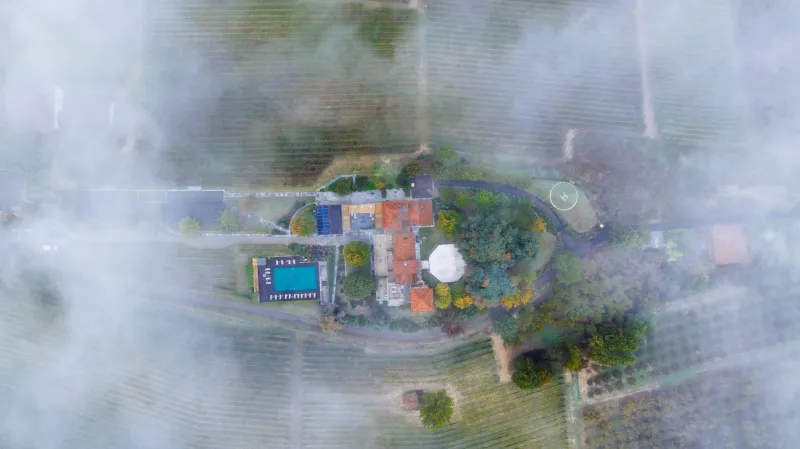
For most of American history, the grand estate represented the purest expression of private wealth—a domain deliberately sealed from commercial consideration. Its value was measured in exclusivity, in the deliberate refusal to participate in the marketplace. Yet something is shifting among the country's most accomplished property owners. Quietly, thoughtfully, and with considerable architectural intention, a new class of luxury homeowner is designing residences that do not merely consume wealth but actively cultivate it.
This is not a story about vacation rentals or opportunistic income. It is a story about vision—about homeowners who regard their properties as living enterprises, capable of generating returns that align with their personal aesthetics, values, and long-term financial architectures.
The Philosophy Behind the Productive Estate
The concept of a revenue-generating estate is not without historical precedent. European aristocratic families long sustained their grand holdings through agricultural leases, vineyard production, and carefully managed tenant arrangements. What is new in the American context is the degree of intentionality—and the sophistication of the mechanisms involved.
Today's ultra-high-net-worth homeowner is not retrofitting an existing property with income potential as an afterthought. Rather, revenue capability is being considered at the earliest stages of architectural planning. Site selection, spatial programming, service infrastructure, and even landscaping decisions are made with dual-purpose functionality in mind. The result is a residence that operates seamlessly as a private sanctuary while possessing the structural and operational DNA of a world-class hospitality venue.
For many owners, this approach is as much philosophical as financial. There is a growing conviction among America's wealthiest families that assets of this magnitude carry a responsibility to perform—that a property commanding eight or nine figures in value ought to contribute meaningfully to a broader wealth strategy rather than simply appreciate passively on a balance sheet.
Private Event Venues: The Estate as Stage
Among the most prevalent revenue models emerging within the luxury residential market is the integration of private event capability. Estates across the Pacific Northwest, the Hudson Valley, the Texas Hill Country, and the lakefront corridors of the Midwest are being designed with discreet event infrastructure woven invisibly into their architecture.
This means more than a spacious lawn. Sophisticated owners are commissioning dedicated catering kitchens positioned to serve outdoor entertaining without compromising the primary residence's domestic tranquility. Climate-controlled pavilions, architecturally cohesive with the main structure, accommodate seated gatherings of several hundred guests. Concealed electrical and audiovisual infrastructure, underground service corridors, and professional-grade lighting systems transform pastoral settings into venues capable of commanding five- and six-figure event fees.
The market for such venues is considerable. Corporations seeking singular settings for executive retreats, luxury brands staging product launches, and high-profile private celebrations represent a client base willing to pay extraordinary premiums for environments that cannot be replicated by any conventional hospitality property. The estate's very exclusivity—its private ownership, its curatorial personality—becomes its most compelling commercial asset.
Luxury Rental Programs and the Art of Selective Access
Beyond episodic events, a number of America's most distinguished property owners have entered into carefully structured luxury rental programs—arrangements that bear little resemblance to the transactional short-term rental market and everything to do with curated, high-value access.
These programs typically operate through invitation or referral, with annual occupancy limited to a deliberately small number of qualified guests. The estate remains the owner's primary or secondary residence for the majority of the year; during select windows, it is made available to a vetted clientele at rates that can reach tens of thousands of dollars per week. Professional estate management teams maintain standards indistinguishable from the finest private hotels, ensuring that each guest experience reinforces rather than diminishes the property's prestige.
For owners, the calculus is compelling. A property generating $300,000 or more annually through a limited rental program offsets carrying costs substantially while preserving the intimacy and condition essential to a personal residence. Crucially, the selectivity of the program often enhances rather than erodes the estate's long-term value—a property with a documented history of exceptional hospitality commands a premium narrative in any future sale.
Wellness Retreats, Wine Programs, and Specialized Amenities
Some of the most imaginative revenue architectures emerging within the luxury residential sector involve specialized amenity programs that transform personal passions into commercial offerings.
Estates with serious wine programs—properties featuring working vineyards, barrel aging facilities, and climate-controlled cellars capable of housing thousands of bottles—are increasingly hosting private tastings, winemaker dinners, and collector events that generate both income and cultural cachet. In California's wine country and increasingly in Virginia and the Finger Lakes region of New York, residential properties are blurring the boundary between private estate and boutique winery with remarkable commercial success.
Wellness-oriented properties represent another compelling frontier. Estates designed around comprehensive health infrastructure—therapeutic pools, infrared sauna complexes, meditation pavilions, and on-site practitioner facilities—are being structured to offer exclusive wellness residencies to a select external clientele. A property that hosts six to eight wellness retreats annually, each accommodating a small group of participants at premium rates, can generate meaningful revenue while advancing an owner's personal commitment to health and hospitality.
Artist residency programs, culinary academies hosted on working farm estates, and private conservation experiences on wildlife properties represent additional expressions of this philosophy—each translating a deeply personal estate vision into a commercially viable offering.
Structural Considerations: Building for Dual Purpose
Designing a property capable of supporting revenue-generating activities without compromising residential quality demands a level of architectural precision that distinguishes the most successful examples of this emerging typology.
Separation of circulation is paramount. Guests and staff associated with commercial programming must be able to arrive, move through the property, and depart without intersecting the owner's private domain. This typically requires dedicated access drives, independent service facilities, and thoughtfully zoned spatial arrangements that preserve the sanctity of the primary residence regardless of what is transpiring elsewhere on the grounds.
Acoustic design, utilities capacity, and regulatory compliance also demand early consideration. Properties intended to host events or guests are subject to local permitting requirements that vary considerably across jurisdictions, and experienced estate architects and legal counsel are essential partners in navigating this landscape before construction commences.
The Convergence of Home and Legacy Asset
What unites the homeowners pioneering this model is a particular understanding of what a great estate can be. Rather than viewing revenue generation as a compromise of residential purity, they regard it as an expression of the property's full potential—a demonstration that the most exceptional homes need not exist in isolation from the broader world but can engage it on carefully curated, deeply intentional terms.
In this sense, the performance estate represents not a departure from the traditions of fine residential living but an evolution of them. The great estates of American history were always more than homes. They were statements of vision, repositories of culture, and anchors of legacy. Today's most thoughtful owners are simply adding one more dimension to that enduring aspiration—ensuring that the estate does not merely represent wealth, but actively participates in its stewardship.