When the Lake House Becomes the Main House: How America's Wealthiest Families Are Rethinking the Hierarchy of Home
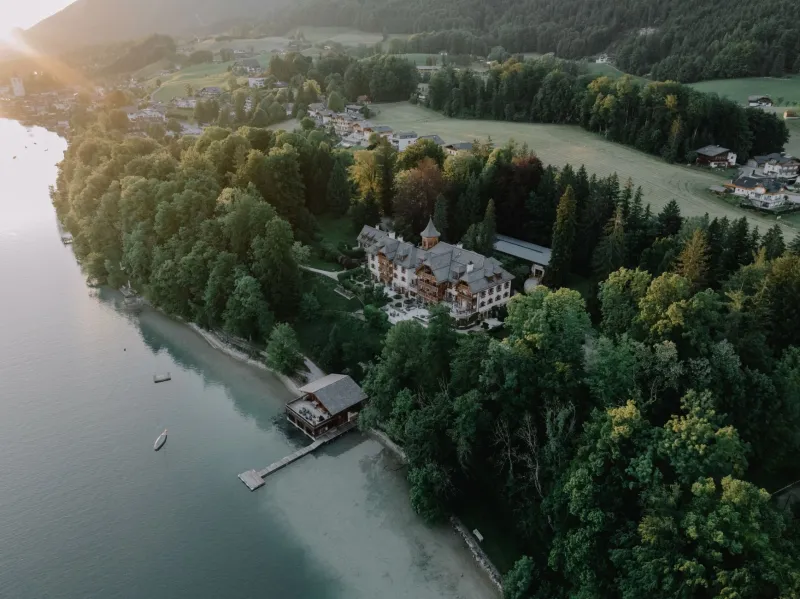
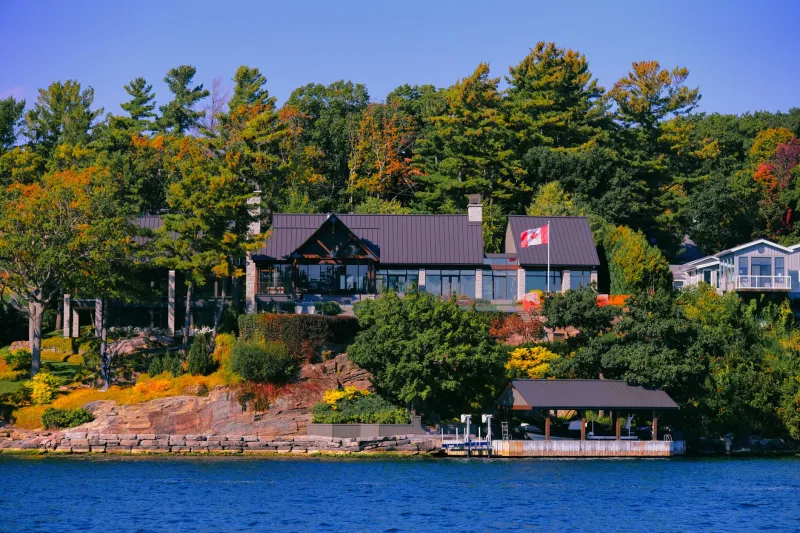
For generations, the lakefront estate occupied a specific and largely unchallenged place in the hierarchy of American wealth: the retreat. The summer escape. The cherished secondary address that families returned to each July and abandoned each September. It was, by design, a property defined by its impermanence — a beautiful parenthesis in an otherwise urban life.
That hierarchy is dissolving.
Across the country's most coveted freshwater corridors — from Lake Tahoe and Lake Geneva to the Finger Lakes, Lake Norman, and the glacial shores of Minnesota's Boundary Waters region — a growing cohort of ultra-high-net-worth families is inverting the traditional order. The lakefront estate is no longer the supporting character. It has become, for many, the primary stage upon which family life, financial planning, and legacy architecture are being built.
The implications — for property values, for estate planning, and for the broader definition of luxury residential real estate — are profound.
The Geography of Priority Has Changed
The pandemic years accelerated a shift that had already been gathering momentum for the better part of a decade. Remote work, once a concession, became a credential. The ability to conduct business from anywhere transformed from a professional curiosity into a structural reality for those operating at the highest levels of the economy.
But the more durable driver of this reversal is subtler than remote work alone. It is the recognition — arriving slowly, then all at once — that the lakefront property had been systematically undervalued in the family's portfolio of lived experience.
When families began spending not two weeks but two months at the water's edge, something shifted in their perception of where life was actually happening. The urban residence, with its proximity to offices now visited only occasionally, began to feel less like a home and more like an expensive convenience. The lake estate, by contrast, felt like the place where children grew, where friendships deepened, where the pace of life aligned with something more intentional.
Priority, in the most literal sense, followed presence.
The Financial Architecture of the Reversal
Sentiment alone does not drive decisions at this level of wealth. The reclassification of a lakefront property from secondary to primary carries meaningful financial consequences — and, for many families, meaningful financial advantages.
In several states where premier lake estates are concentrated, the tax environment for primary residences differs substantially from that of secondary properties. Homestead exemptions, capital gains treatment on eventual sale, and state income tax considerations all factor into the calculus when a family formally designates a new primary domicile. For families with the flexibility to establish residency in states without income tax — Nevada, Florida, and Texas among them — the financial incentive to anchor their primary designation to a lakefront estate in a favorable jurisdiction can be considerable.
Beyond the tax dimension, the investment thesis for lakefront primary residences has grown markedly more compelling. Waterfront land is finite by definition. As demand from both domestic buyers and internationally mobile wealth continues to concentrate on America's most distinguished lake markets, the scarcity premium embedded in these properties has compounded with unusual consistency. Families who once viewed their lake estate as a lifestyle asset are increasingly recognizing it as among the most defensible stores of value in their broader portfolio.
The estate that once served leisure is now, in many cases, serving wealth preservation.
The Community Calculus
Financial strategy, however, only partially explains the depth of this shift. There is a social and psychological dimension to the lake estate's ascendance that deserves equal attention.
The communities that form around America's premier freshwater estates possess a cohesion rarely found in urban neighborhoods. Proximity to shared water creates a particular quality of belonging — one rooted in seasonal rhythm, in the rituals of the dock and the boat launch, in the informal governance of a shoreline community that has often known itself for generations. For families navigating the social complexity of major metropolitan centers, this quality of community is not merely pleasant. It is, increasingly, irreplaceable.
For ultra-high-net-worth individuals who have achieved the professional summit and are now directing their energies toward family continuity and legacy, this sense of rootedness carries genuine strategic value. The lake estate becomes not simply a place to live, but a place to belong — and belonging, at this level of life, is not a small thing.
Children raised with deep ties to a specific shoreline, to a specific community, to a specific landscape, carry those ties into adulthood. The lake estate, when properly positioned, becomes the physical anchor of a family identity that transcends any single generation.
Designing for Primacy, Not Seasonality
The architectural and operational implications of this reclassification are substantial. A property designed as a seasonal retreat is, in almost every dimension, inadequate to the demands of a primary estate.
Families making this transition are investing accordingly. The lakefront properties now attracting the most sophisticated buyers and the most significant capital are those designed from the outset — or comprehensively renovated — to function at the highest level year-round. Robust mechanical systems capable of managing shoulder-season and winter conditions. Home office infrastructure that meets professional-grade standards. Guesthouses and ancillary structures that accommodate extended family and professional staff with genuine comfort.
The kitchen, once a summer kitchen, is now a culinary suite. The boat dock, once a seasonal amenity, is now integrated into a year-round waterfront program that may include wellness facilities, private beach infrastructure, and climate-controlled storage for a serious fleet of watercraft.
The distinction between the lakefront estate as retreat and the lakefront estate as residence is, ultimately, a distinction of intention — and that intention is now being expressed in the architecture, the systems, and the staffing of America's finest waterfront properties.
A New Standard of Legacy Planning
Perhaps the most consequential dimension of this trend is its intersection with multigenerational estate planning. When a lakefront property is elevated to primary status and positioned as the family's defining asset, it enters the conversation of legacy in a fundamentally different way.
Families working with estate planning advisors are increasingly structuring their lakefront estates within family limited partnerships, irrevocable trusts, and other vehicles designed to ensure continuity across generations while managing the estate and gift tax implications of a highly appreciated asset. The lake house, once a sentimental inheritance, is now the subject of sophisticated legal and financial architecture.
The families doing this work most thoughtfully are those who understand that the estate's value is not simply monetary. It is relational, historical, and irreplaceable in ways that a portfolio of liquid assets can never fully replicate. The water, the light, the particular quality of a summer evening on a specific shore — these are the things that bind families across time.
At Villa du Lac, we have long understood that the most exceptional properties are not merely addresses. They are foundations upon which extraordinary lives are constructed, and upon which the most enduring family legacies are built. The families now placing their lakefront estates at the center of that work are not departing from tradition. They are, in the most considered sense, honoring it.