The Invisible Estate: How America's Most Accomplished Homeowners Are Redefining Luxury as Something Never Meant to Be Seen
There is a particular kind of confidence that requires no audience. It does not announce itself at the gate, does not perform along the shoreline, and does not solicit admiration from the road. It simply exists — fully realized, deeply intentional, and entirely indifferent to outside opinion. This is the confidence now shaping the most significant estates in America, and it is rewriting what luxury architecture means at its highest expression.
For much of the past three decades, the prevailing grammar of ultra-high-end residential design spoke in superlatives. Square footage was a statement. Facades were composed for maximum visual impact. Waterfront positions were chosen as much for their visibility to passing boats as for the views they offered from within. The estate was, in many respects, a curated performance — a physical manifestation of achievement intended to be read and acknowledged by others.
That grammar is changing. Quietly, deliberately, and with considerable architectural sophistication, a growing cohort of America's most discerning homeowners is investing not in visibility, but in its opposite.
The Retreat From Display
The shift is not born of modesty, nor is it a reaction against wealth itself. Rather, it reflects a maturing understanding of what private life at the highest level can and should provide. When material acquisition has been exhausted as a source of satisfaction — when the next car, the next watch, the next publicly admired renovation no longer moves the needle — what remains is the quality of one's inner experience. And that experience, by definition, cannot be photographed, ranked, or envied.
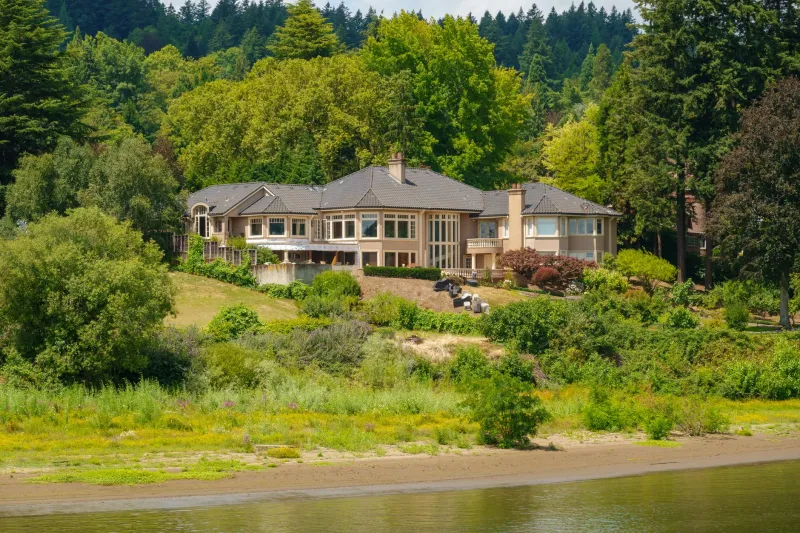
Across the country's most coveted residential landscapes, from the lake country of Michigan and Minnesota to the wooded hillsides of western North Carolina, from the private valleys of Montana to the secluded coves of New England, a new typology of estate is emerging. These properties share certain characteristics: deep setbacks from public access, dense natural screening, deliberately understated approach sequences, and architectural languages that prioritize interior richness over exterior spectacle.
The homes are not modest. They are, in many cases, among the most technically sophisticated and materially refined residences ever constructed on American soil. But their ambitions are turned inward.
Architecture That Protects Rather Than Projects
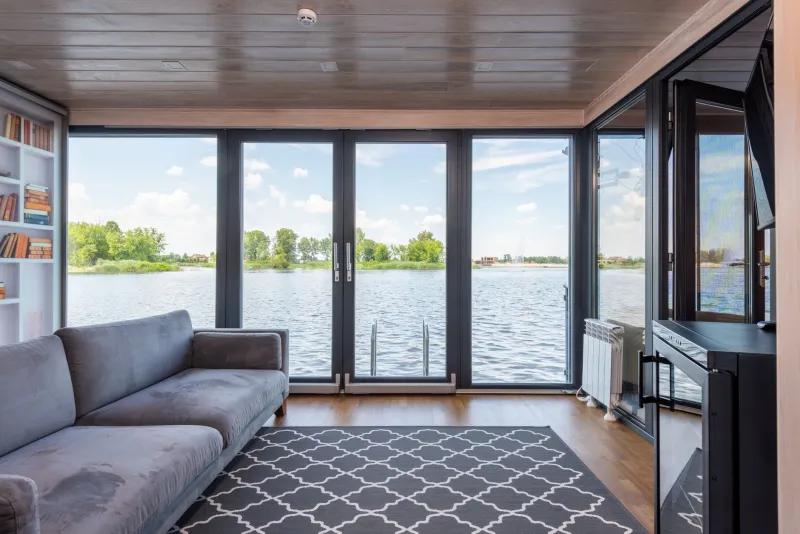
The design vocabulary of the private sanctuary estate departs meaningfully from the conventions of trophy property. Where the prestige home might feature an expansive glass facade oriented toward the street or marina, the sanctuary estate positions its most dramatic glazing inward — toward a private courtyard, a forest edge, or a water view accessible only from within the property boundaries.
Landscaping becomes a primary architectural tool. Mature canopy trees are preserved or introduced not as ornament but as a living perimeter. Topography is sculpted to absorb and deflect rather than elevate and expose. Entry sequences are designed to create a gradual psychological transition — a deliberate decompression from the public world into something entirely one's own — rather than to impress arriving guests with an immediate show of grandeur.
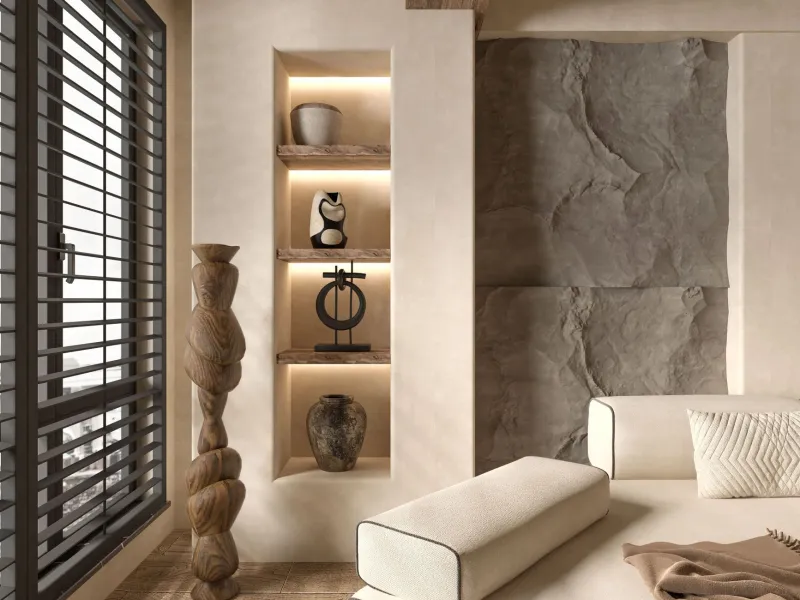
Materials, too, are selected with different priorities. Natural stone that weathers into the landscape, timber that reads as an extension of surrounding woodland, earth tones that absorb rather than reflect light — these choices speak to a design philosophy concerned with belonging rather than standing out. The goal, as one architect working on a private lakeside commission in Vermont described it, is for the home to feel as though it has always been there, as though the land itself chose this arrangement.
The Psychological Architecture of Solitude
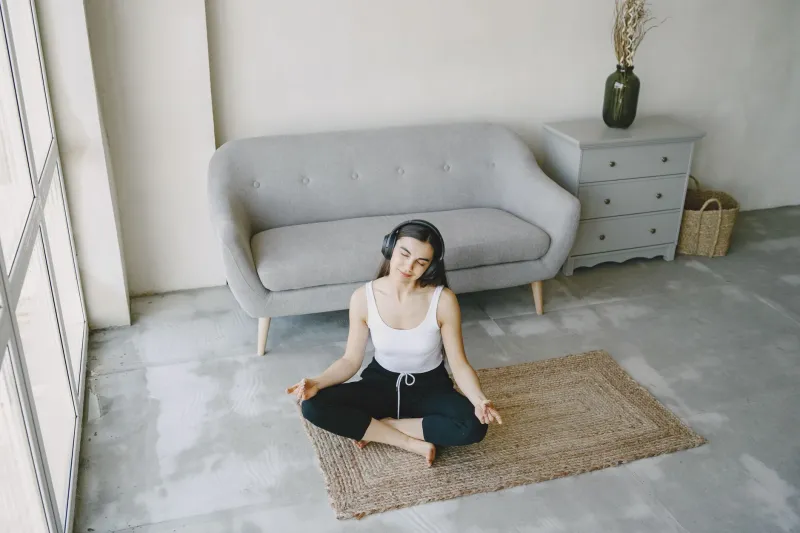
Beyond the physical, the sanctuary estate is designed around a careful understanding of how space shapes interior experience. Rooms are proportioned for intimate occupation rather than social performance. Libraries, private gardens, meditation spaces, and personal wellness environments receive the investment that previous generations of luxury homeowners directed toward formal entertaining wings.
The home office is not positioned to signal productivity but to enable genuine concentration. The primary suite is not a showcase for hotel-grade finishes but a deeply personal environment calibrated to the specific sensory preferences of its occupants — acoustic softness, controlled natural light, materials chosen for touch as much as appearance.
This inward orientation extends to how technology is deployed. Smart home systems in the sanctuary estate are configured not to impress visitors but to serve the occupants with frictionless precision — adjusting environments automatically, anticipating needs quietly, operating without the theatrical demonstrations that sometimes accompany high-end technology installations.
A Redefinition of Status Itself
Perhaps the most culturally significant dimension of this trend is what it implies about the evolution of status among America's most accomplished class. For generations, luxury real estate functioned partly as social currency — a visible, legible signal of position and success. The address, the architect, the scale of the renovation all communicated something to a specific audience.
The sanctuary estate declines that transaction. Its value is not communicable in conversation or visible in aerial photography. It cannot be assessed by a neighbor, a colleague, or a social media follower. Its worth is measured entirely in the quality of the life lived within it — the depth of rest it enables, the clarity of thought it supports, the sense of genuine refuge it provides from a world that grows louder and more demanding each year.
This is not a renunciation of success. It is, if anything, its most mature expression: the recognition that the ultimate luxury is a life that belongs entirely to oneself.
What This Means for the Market
For those considering acquisitions at this level, the implications are practical as well as philosophical. Properties that prioritize privacy infrastructure — established natural screening, generous land buffers, controlled access, minimal road frontage — are commanding increasing attention from buyers who might once have focused exclusively on waterfront exposure or architectural pedigree.
The calculus of value is shifting. A property that offers profound seclusion, even at some cost to conventional prestige metrics, may represent a more compelling acquisition than one that checks traditional luxury boxes while remaining fundamentally exposed to the public gaze.
At Villa du Lac, we have observed this evolution closely across the markets we serve. The most thoughtful buyers we encounter are asking different questions than they did a decade ago. Not simply: How does this property look? But rather: How will this property feel — on an ordinary Tuesday morning, on a difficult afternoon, in the decade to come?
Those are the questions that lead, inevitably, toward the invisible estate. And the answers, for those who find the right property, can be quietly extraordinary.