Living in Full Dimension: How America's Most Exceptional Estates Are Being Designed to Engage Every Sense
For generations, the language of luxury real estate has been overwhelmingly visual. Soaring ceilings. Sweeping waterfront vistas. Gallery-worthy architecture. And while the eye will always command its rightful place in the hierarchy of residential design, America's most discerning homeowners are increasingly demanding something more complete — a home that speaks not merely to the gaze, but to the full spectrum of human perception.
This is the sensory estate: a residence conceived from the ground up as an immersive, multi-dimensional environment where every architectural decision, every material selection, and every spatial arrangement is made in deliberate service of how the home feels to inhabit. It is, in many respects, the logical apex of luxury — the point at which design transcends aesthetics and becomes an experience.
The Philosophy of Immersive Living
The concept of sensory design is not entirely new. Spa architects and hospitality designers have long understood that environments can be engineered to induce calm, pleasure, or invigoration. What is new — and what represents a meaningful shift in residential architecture — is the deliberate application of these principles to private homes at the highest tier of the market.
Leading architects and interior designers working with ultra-high-net-worth clients across the country describe a client base that has grown increasingly articulate about what they want their homes to do for them, not merely what they want those homes to look like. The conversation has moved from finishes and floor plans to the felt quality of daily life — the way morning light moves through a room, the scent that greets a resident upon returning home, the particular silence that makes deep rest possible.
This is a fundamentally different brief, and it demands a fundamentally different design process.
Sound as Architecture
Of all the senses, sound may be the most underestimated in residential design — and, increasingly, the most carefully managed in elite properties.
Acoustical engineering, once the exclusive domain of recording studios and concert halls, has found a quiet but influential home in America's finest residences. The goal is rarely absolute silence, but rather a curated sonic environment: the controlled hush of a library wing, the gentle resonance of a great room that encourages conversation without echo, the soft ambient presence of a water feature that anchors a courtyard in calm.
Materials play a decisive role. Thick plaster walls, solid-core doors, and carefully selected flooring — from dense wool carpets to cork underlayment beneath hardwood — contribute to an acoustic character that is felt as much as heard. Some estates commission dedicated acoustic consultants to model sound movement through a property before a single wall is built, ensuring that the home's sonic landscape is as intentional as its floor plan.
For those who entertain, the stakes are even higher. A dining room engineered for intimate conversation, a home theater tuned to reference-level precision, a music salon designed around the resonant properties of a grand piano — these are not indulgences but expressions of a deeply considered approach to how life is lived within four walls.
The Invisible Architecture of Scent
Fragrance is among the most emotionally potent of the senses, capable of triggering memory and mood with an immediacy that no other stimulus quite matches. It is, perhaps for this reason, that the most thoughtful luxury estates are now treating scent as a genuine design element.
This manifests in several ways. Some homeowners work with independent perfumers or olfactory consultants to develop signature scents — subtle, proprietary blends diffused through integrated HVAC systems — that become as much a part of a home's identity as its architecture. Others approach scent more organically, through the strategic placement of aromatic gardens, the selection of wood species for fireplaces and cabinetry, or the use of natural stone that carries its own faint mineral character.
The entry sequence is of particular importance. Architects who specialize in sensory design often speak of the threshold moment — the instant a resident or guest crosses from the exterior world into the private realm of the estate — as an opportunity to signal a complete shift in atmosphere. The right combination of temperature, light, and fragrance at that threshold can communicate welcome, calm, and exclusivity more powerfully than any material finish.
Texture and the Tactile Landscape
In an age of polished surfaces and high-gloss finishes, the return of texture to luxury interiors represents something of a quiet rebellion — and a sophisticated one at that.
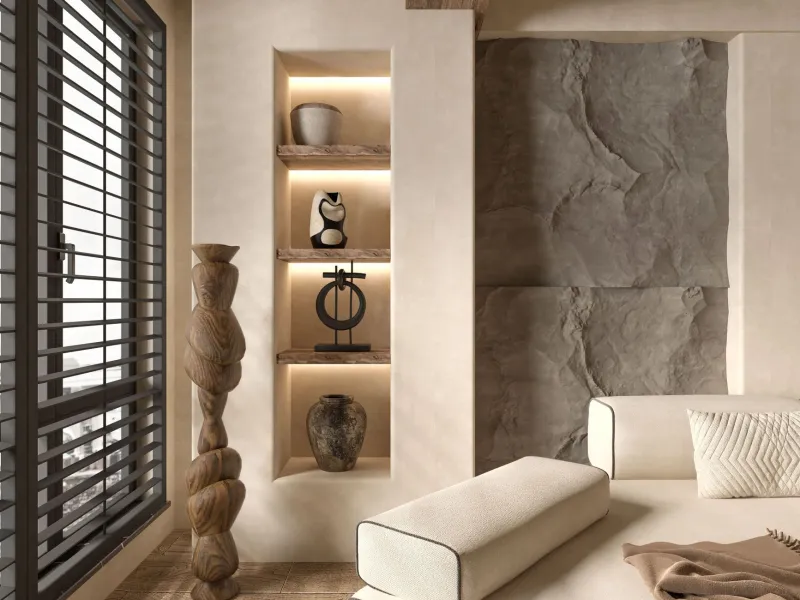
The finest estates are increasingly defined by the richness of their tactile vocabulary. Hand-troweled plaster walls that invite the touch of a passing hand. Custom millwork in figured walnut or quarter-sawn oak, each surface revealing the grain of a living material. Upholstery in performance velvets, brushed linens, and hand-woven textiles that reward prolonged contact. Natural stone countertops left with a honed or leathered finish rather than the expected high polish, their surfaces communicating age, depth, and authenticity.
Flooring, in particular, has become a medium of tactile expression. Radiant heat beneath wide-plank stone or wood transforms the act of walking barefoot through a home into something genuinely pleasurable — a small but cumulative luxury that shapes the experience of a property in ways that no photograph can fully convey.
Light as a Living Element
Lighting design in the sensory estate extends well beyond the selection of fixtures. It encompasses the orchestration of natural light across the arc of the day, the transition from morning clarity to evening warmth, and the precise calibration of artificial sources to support every activity and mood a home must accommodate.
Circadian lighting systems — which adjust color temperature and intensity in response to the time of day — have moved from the realm of wellness centers into the master suites and living spaces of America's most progressive luxury homes. These systems work in concert with architectural features: south-facing clerestories that flood interiors with diffuse winter light, deep overhangs that filter the harsher angles of summer sun, and light wells that draw natural illumination into the interior of larger floorplates.
The evening experience is equally considered. Candlelight-adjacent warmth in dining rooms, gallery-calibrated illumination in art spaces, and the gentle glow of landscape lighting that extends the estate's visual reach into the surrounding grounds — each layer contributes to a nocturnal character that is as carefully composed as the daytime one.
The Culinary Dimension
No sensory survey of the luxury estate would be complete without consideration of taste — and the spaces that support its cultivation. The professional-grade kitchen has long been a standard feature at this tier of the market, but the most intentional sensory estates go further, designing entire culinary ecosystems: herb gardens positioned for immediate harvest, wine cellars engineered for both preservation and presentation, outdoor kitchens that extend the pleasures of the table into the landscape.
These spaces are designed not merely for function but for atmosphere — the kind of kitchen where the act of cooking is itself a pleasure, where the arrangement of equipment, the quality of light, and the proximity of a garden conspire to make the preparation of a meal feel like a form of leisure rather than obligation.
The Whole Greater Than Its Parts
What distinguishes the truly exceptional sensory estate is not the presence of any single extraordinary feature, but the coherence of the whole. Every element — acoustic, olfactory, tactile, luminous, and culinary — has been considered in relation to every other, creating a residential environment that feels not assembled but composed.
For buyers at the highest levels of the luxury market, this coherence is increasingly the decisive factor. It is, ultimately, the difference between a home that impresses and a home that endures — one that rewards not the first viewing but the ten-thousandth morning.