The Restoration Mandate: How America's Most Driven Professionals Are Engineering Lake Estates for Deep Recovery

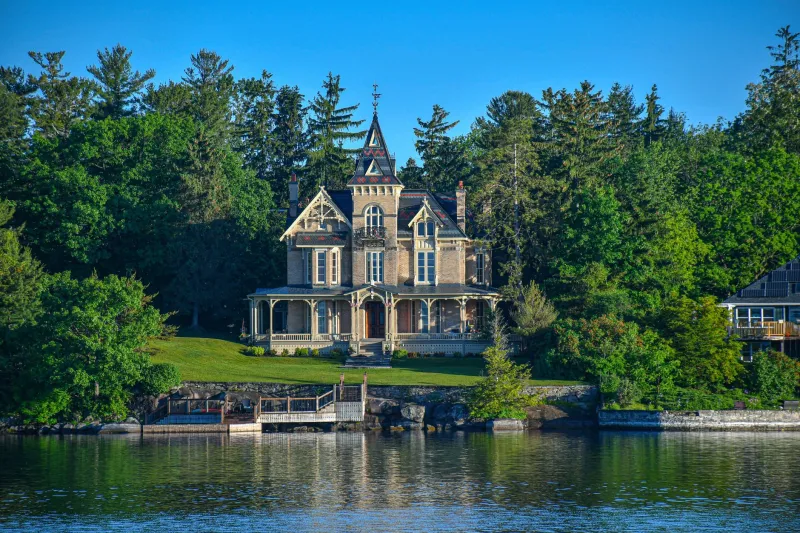
For decades, the lake house occupied a familiar role in American affluence—a seasonal escape, a backdrop for family photographs, a property held as much for sentiment as for strategy. That definition is being quietly retired. In its place, a more purposeful vision is taking shape along the shorelines of Lake Tahoe, Lake Geneva in Wisconsin, Lake Martin in Alabama, and dozens of other premier destinations across the country.
The homeowners driving this shift are not seeking leisure in the conventional sense. They are CEOs who manage thousands of employees, founders who have spent years in relentless pursuit of a vision, and senior partners whose professional identities are inseparable from perpetual availability. What they are commissioning—and what the finest architects and designers are now delivering—are estates engineered not for vacation, but for restoration.
The distinction matters enormously.
From Retreat to Recovery Architecture
A vacation home is designed around pleasure. A restoration estate is designed around the nervous system.
This is not hyperbole. Leading residential architects working with high-net-worth clients at the intersection of wellness and luxury increasingly consult neuroscience research when making spatial decisions. The findings consistently point toward the same principles: that genuine cognitive recovery requires an environment that reduces decision fatigue, minimizes sensory overload, and creates conditions for what psychologists call "involuntary attention"—the effortless, restorative engagement that natural environments uniquely produce.
Water, as it turns out, is extraordinarily well-suited to this task. The rhythmic visual movement of a lake surface, the ambient acoustic quality of water against a dock, the expansive sightlines that encourage the gaze to soften and settle—each of these elements actively supports neurological downregulation in ways that an urban penthouse, however magnificent, simply cannot replicate.
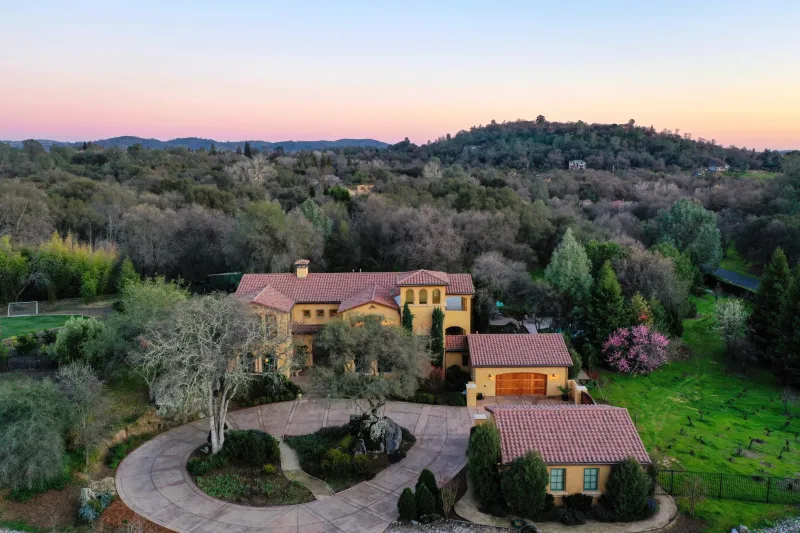
The most thoughtful restoration estates are designed to leverage these properties from the moment of arrival. Entry sequences are intentionally decompressive—long gravel drives through native plantings, covered motor courts that transition gradually from road noise to natural quiet, foyers oriented toward the water rather than toward interior spaces. The message is architectural: you are no longer in the world of performance. You are somewhere else entirely.
The Amenity Calculus
Not all amenities are created equal when the objective is recovery rather than recreation.
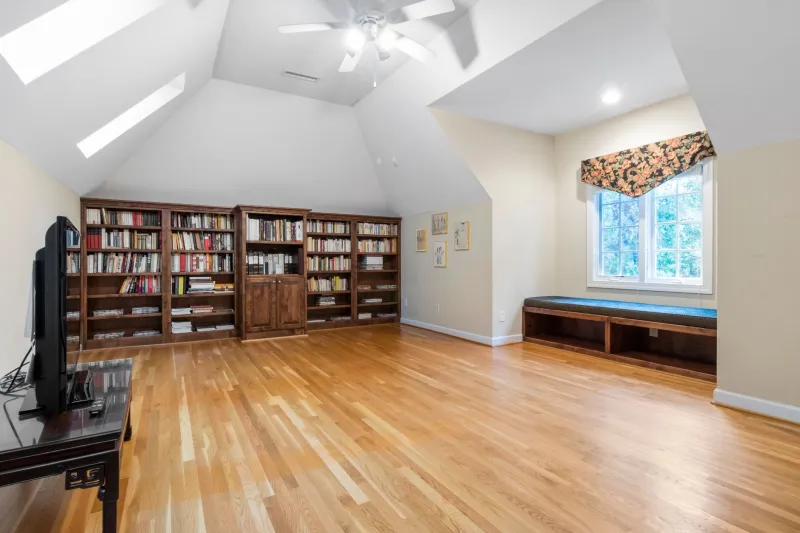
The screening room and the wine cellar, staples of luxury residential programming, serve a different psychological function than the cold plunge adjacent to a sauna overlooking the lake, or the library designed with zero wireless signal by deliberate intent. Architects and interior designers working on restoration-focused estates are increasingly asked to make hard choices about what belongs in a property whose primary purpose is renewal.
Several principles have emerged from this discipline. First, passive amenities—those that require no scheduling, no instruction, and no performance—tend to deliver the most consistent restorative value. A well-positioned hammock between mature oaks at the water's edge is not a lesser amenity than a climate-controlled fitness center; in many respects, for the specific purpose of restoration, it is a superior one.
Second, the kitchen and dining architecture of a restoration estate deserves particular attention. For executives accustomed to eating at their desks or in restaurants, the act of preparing a meal in a generously proportioned, well-lit kitchen that opens to lake views represents a profound shift in relationship to time. Several prominent residential designers now treat the kitchen as the psychological heart of the restoration estate—the space where the transition from professional urgency to human presence is most reliably completed.
Third, and perhaps most critically, the finest restoration estates are designed to make digital disconnection feel natural rather than effortful. This may mean a dedicated device station near the entry—a physical place where phones and laptops are deposited upon arrival—or it may mean architectural choices that make connectivity feel incongruous: deep porches, outdoor dining terraces, sleeping quarters oriented away from screens and toward the horizon.
The Sleep Architecture Imperative
Among the professionals commissioning restoration estates, sleep quality has emerged as a defining design priority—and one that reshapes decisions across nearly every system in the home.
The primary suite of a restoration-focused lake estate is increasingly designed with the precision of a sleep laboratory. Window orientation is chosen to prevent premature morning light intrusion without sacrificing the lake view upon waking. HVAC systems are specified for near-silent operation and precise temperature control. Bedding, mattress specifications, and even ceiling heights are selected in consultation with sleep specialists.
Some of the most accomplished examples take this further. Guest wings are positioned to buffer the primary suite from household activity. Mechanical rooms are acoustically isolated. Smart home systems are programmed to automatically dim exterior lighting, silence notifications, and lower interior temperatures at a predetermined hour—not because the homeowner requests it each evening, but because the estate itself understands what restoration requires.
The Return on Investment
It would be a mistake to frame the restoration estate purely in terms of personal wellness. For the professionals who commission them, these properties represent a genuine strategic asset.
The creative renewal that follows sustained exposure to a well-designed natural environment has been documented in research from institutions including the University of Michigan and Stanford, whose studies have demonstrated measurable improvements in problem-solving, creative cognition, and executive function following time spent in natural settings. For a founder preparing to navigate a critical business decision, or a senior executive returning to a high-stakes negotiation, the cognitive advantage conferred by a week at a well-designed lake estate may be among the highest-return investments available.
This is precisely the framing that the most sophisticated homeowners now apply to their waterfront properties. The lake estate is not a cost of a successful career. It is, properly designed and intentionally used, one of its most powerful instruments.
At Villa du Lac, we recognize that the properties we represent are more than addresses. They are the physical environments in which the most consequential decisions of our clients' lives are made—or unmade, and remade, with clarity.