Seen and Unseen: The Refined Art of Integrating Smart Technology Into Luxury Homes
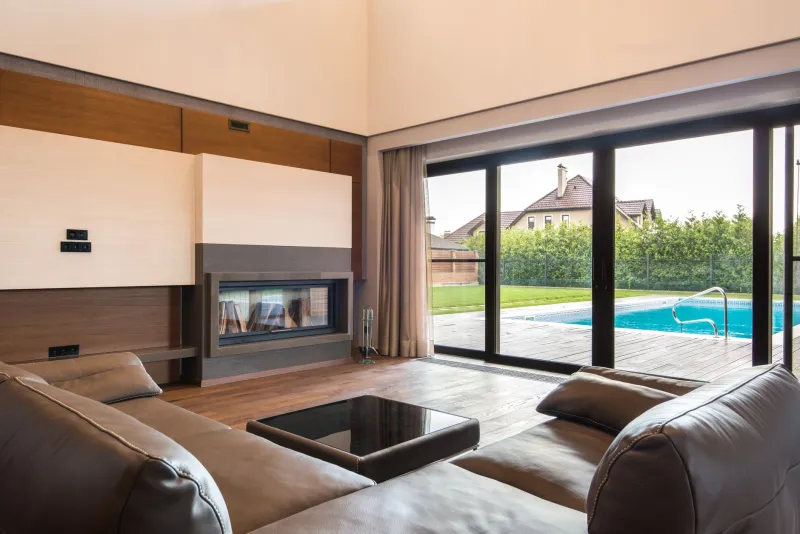
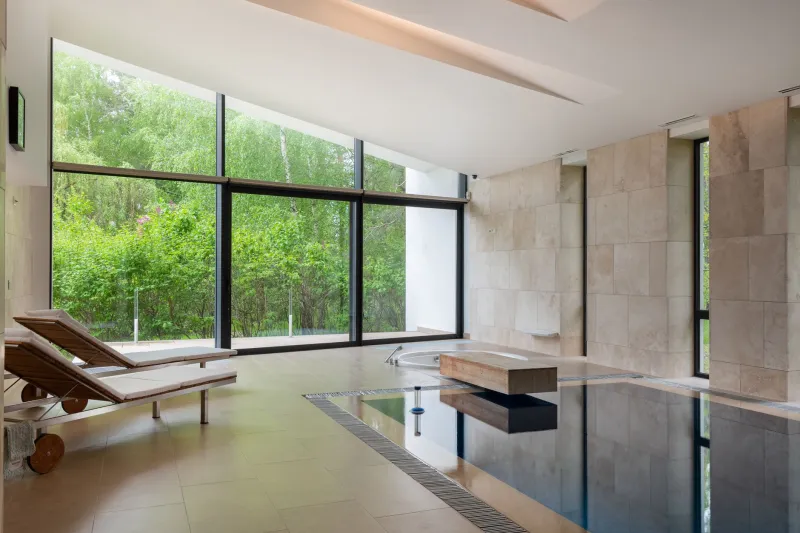
There is a particular pleasure in entering a room that feels precisely right. The temperature settles at exactly the degree you prefer. The lighting is neither too warm nor too cool. The ambient sound is present but not intrusive. Nothing interrupts your eye as it travels across hand-plastered walls, across the grain of a walnut floor, toward a view of still water beyond the glass. What you are experiencing, in those suspended moments, is technology performing at its absolute highest level—by becoming invisible.
For a generation of discerning homeowners, the promise of the smart home was complicated by its execution. Early iterations of home automation arrived with touchscreens bolted to walls, bundled cables snaking through millwork, and control panels that announced their presence in spaces where restraint was the prevailing design philosophy. The technology was capable. The integration, frequently, was not.
That era is passing. Today, the architects and designers shaping America's most exceptional residential properties are approaching home automation the way a skilled tailor approaches a bespoke suit—every element serving a purpose, nothing superfluous, and the craftsmanship visible only to those who know precisely where to look.
The Discipline of Disappearance
At the core of what designers now refer to as "invisible luxury" is a deceptively simple principle: the system should serve the home, never compete with it. This requires a fundamental shift in the sequence of decision-making. In the most sensitively designed estates, technology infrastructure is not layered onto a completed interior. It is conceived alongside the architecture itself, woven into the structural conversation from the earliest drawings.
Lead architect Gregory Hartwell, whose firm has completed lakefront properties in the Hamptons, Lake Tahoe, and coastal Maine, describes the approach as one of deliberate subordination. "We think about conduit pathways the same way we think about structural beams," he has noted. "If it isn't resolved at the schematic stage, you spend the rest of the project apologizing for it."
The practical implications are considerable. Speaker systems concealed within custom plaster ceilings. Motorized shades housed within bespoke millwork pockets. HVAC registers machined from the same stone used for adjacent flooring. Security cameras integrated into architectural details—corbels, eave brackets, landscape lighting fixtures—so that the surveillance apparatus never announces itself as such.
Climate Intelligence Without Compromise
Of all the systems that define modern luxury living, climate control presents perhaps the most persistent design challenge. The mechanical requirements are substantial: sophisticated zoning, humidity management, air purification, radiant heating, and increasingly, systems that respond to occupancy patterns and external weather data in real time.
Platforms such as Lutron and Savant, alongside newer entrants like Josh.ai, now offer climate integration that responds to voice commands, learns household preferences over time, and adjusts automatically as seasons shift. The hardware, critically, has followed the software's lead. Thermostats designed by architects rather than engineers—flush-mounted, minimal, finished in materials that echo surrounding surfaces—have replaced the utilitarian boxes that once interrupted the visual continuity of premium interiors.
For properties along the great American lakeshores, where interior environments must respond to the dramatic thermal swings that accompany waterfront exposure, this kind of intelligent climate management is not merely aesthetic preference. It is functional necessity. A villa whose southern facade is composed predominantly of glass requires a system sophisticated enough to anticipate solar gain hours before it becomes discomfort—and elegant enough to do so without a single visible intervention.
Security as Architecture
The security requirements of a high-value estate are, by nature, in tension with the openness and transparency that define contemporary luxury design. Floor-to-ceiling glass, seamless indoor-outdoor transitions, and expansive terraces create the sense of liberation that discerning buyers seek—and simultaneously present the perimeter challenges that security professionals must address.
The resolution, at the finest properties, is architectural rather than technological in its expression. Landscape design incorporates natural barriers—grade changes, dense plantings, water features—that define boundaries without the vocabulary of fortification. Lighting systems that appear purely atmospheric serve dual purpose as deterrence infrastructure. Door and window sensors are embedded within hardware profiles, invisible at human scale.
Biometric access—fingerprint, retinal, and increasingly facial recognition—has supplanted the keypad entry systems that once clustered beside front doors like afterthoughts. At several notable estates in Colorado and California wine country, primary entry is managed through systems that recognize household members automatically, requiring no gesture or interaction whatsoever. The door simply opens. The house, in effect, knows you.
The Living Room Reconsidered
Entertainment technology has historically been the most visually disruptive element in luxury interiors. The television, in particular, has demanded accommodation—a dark rectangle requiring either concealment or composition around it, neither solution entirely satisfying.
The current generation of display technology has begun to resolve this tension in earnest. Samsung's Frame series, LG's gallery-mode OLEDs, and fully retractable projection systems that rise from custom cabinetry or descend from ceiling vaults have given designers meaningful options. At one recently completed estate on Lake Michigan's eastern shore, the primary living room features a 120-inch projection surface that, when not in use, presents the visual profile of a linen-textured wall panel. The transformation, accomplished in under thirty seconds, is complete.
Audio presents its own evolution. Whole-home sound systems distributed through architectural speakers—installed within ceiling plaster, embedded in wall panels, or integrated into outdoor landscape features—now achieve acoustic performance that audiophiles of a previous generation would have considered impossible outside a dedicated listening room.
The Human Element
For all the sophistication of current technology, the designers and architects who execute it most successfully share a common conviction: automation must enhance human experience without replacing human judgment. The finest smart home does not presume to know what its occupants need at every moment. It offers possibility, responds to preference, and withdraws when its presence is not required.
This is, ultimately, a design philosophy as much as a technical one. The goal is not a home that performs for its owners but a home that performs with them—one that amplifies the pleasures of exceptional living without inserting itself into the experience as protagonist.
At Villa du Lac, we have long held that the measure of a truly extraordinary residence is not the sum of its features but the quality of the life it enables. The best technology, like the best architecture, is felt rather than seen. It creates the conditions for beauty and comfort to flourish—then steps aside, and lets the living begin.