Before the Crowd Arrives: Seven American Lake Towns on the Edge of Discovery
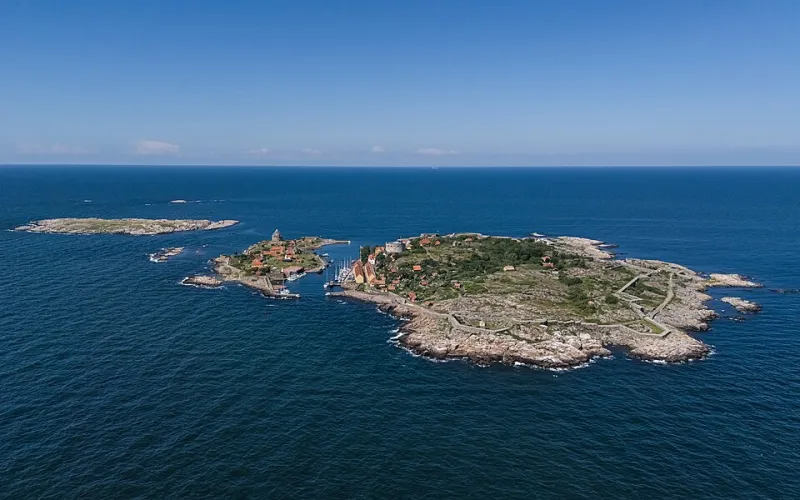
Photo: A.Savin, FAL, via Wikimedia Commons
Every trophy lake market was once a rumor. Lake Geneva was a Chicago railroad town's summer colony before it became a byword for lakeside wealth. Lake Tahoe's North Shore traded quietly for decades before scarcity repriced it overnight. The pattern is consistent: an anchor buyer, a design-forward renovation, a restaurant worth the drive — and then the window begins to close.
The seven communities below are in those early chapters now. None is a secret. All are, in market terms, early.
1. Lake Charlevoix, Michigan
Michigan's northwest lower peninsula holds several inland lakes, but Charlevoix — 17,000 acres of deep, clean water connected to Lake Michigan — offers the region's best ratio of shoreline quality to price. Entry for a genuine waterfront cottage still begins well below comparable Lake Michigan frontage, while the town of Charlevoix itself has quietly accumulated the dining and marina infrastructure that signals a market maturing. Inventory of quality frontage is thin and thinning.
2. Lake Glenville, North Carolina
At 3,500 feet in the Blue Ridge, Glenville is among the highest-elevation major lakes east of the Mississippi — which means cool summer evenings in a region where high-end buyers from Atlanta, Charlotte, and increasingly Texas are concentrating. The nearby success of Cashiers and Highlands has pulled attention up the valley; Glenville's limited shoreline, largely regulated by a protective dam agreement, is the scarcity play in the corridor.
3. Walloon Lake, Michigan
Technically a neighbor of better-known Torch and Charlevoix, Walloon has a different character: a narrow, fjord-like body of water with a village that has attracted a disproportionate share of design-literate buyers. Ernest Hemingway's family summered here, and the lake's literary patina pairs with genuinely protected shoreline. Prices have moved; they have not yet caught the lake's quality.
4. Lake Jocassee, South Carolina
A wilderness lake of almost surreal clarity in the Upstate, Jocassee is nearly entirely surrounded by protected public land — which means private frontage is close to a finite asset class. The trade-off is remoteness and rugged access; the reward is a shoreline that will never be developed. Buyers comfortable with seclusion are acquiring the handful of available parcels before the conservation math becomes widely understood.
5. Big Spirit Lake, Iowa
The Iowa Great Lakes have long served a regional clientele; what has changed is the arrival of out-of-region capital and a renovation wave in the towns of Okoboji and Spirit Lake. Hard-surface boat access, a genuine four-season economy, and prices that remain a fraction of Wisconsin's Door County or Minnesota's Brainerd Lakes make this the Midwest's most asymmetric lake market.
6. Priest Lake, Idaho
Idaho's panhandle is famous for Coeur d'Alene, but Priest Lake — ringed by national forest, anchored by a small year-round community — is where the state's most discerning water buyers have begun to concentrate. Frontage is limited, winter access is real but manageable, and the sense of a market on the cusp is palpable in every brokerage conversation.
7. Lake Burton, Georgia
The Georgia mountains' chain of private lakes — Burton, Rabun, Seed — has served Atlanta wealth for a century. What is new is the scale of the recent builds and the arrival of national design talent, which is rapidly resetting the ceiling for the entire corridor. Lake Burton's boathouse culture, unique in the Southeast, gives it a social architecture rivals cannot easily copy.
Reading the Window
None of these markets will replicate Tahoe's trajectory exactly, and none should be bought on speculation alone. The common thread is structural: constrained frontage, improving local amenity, and a first wave of anchor-quality renovations. Historically, the interval between those conditions and broad repricing is measured in years, not decades. The buyers arriving now are not chasing the next Tahoe. They are simply refusing to pay Tahoe prices later for the same water.