Beyond the Marquee Waters: The Quiet Migration to America's Unknown Lakes

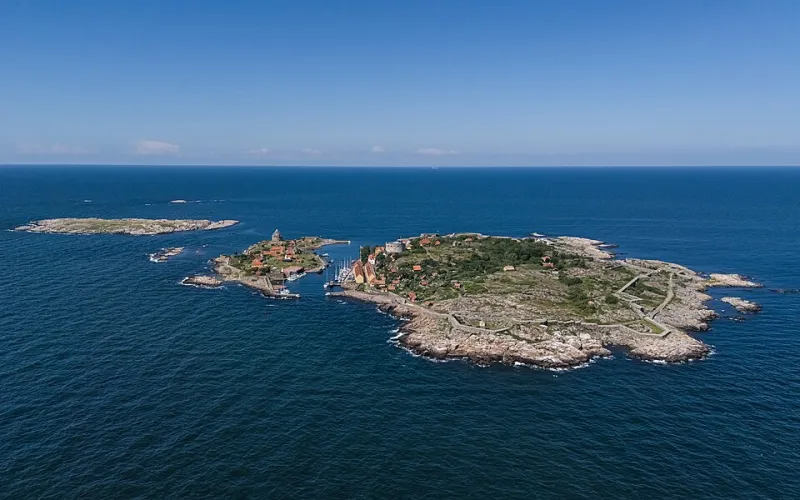
Photo: Pudelek, CC BY-SA 4.0, via Wikimedia Commons
For decades, the American lakefront hierarchy was settled wisdom. Lake Tahoe for the West. Lake Geneva for Chicago's old money. Lake Norman for the Southeast. The names carried their own cachet, and buyers paid accordingly — often $3,000 to $10,000 per frontage foot on the most celebrated waters.
That hierarchy is now being quietly renegotiated. Across the country, a growing share of high-net-worth buyers is passing over marquee lakes entirely, choosing instead unheralded inland waters where frontage remains available, privacy is still the default, and appreciation has not yet been priced in.
Why the Famous Lakes Stopped Making Sense
The arithmetic on a Tier One lake has become difficult to defend. Inventory on Tahoe, Geneva, or Michigan's most storied waters is chronically thin, bidding contests are routine, and — critically — much of the appreciation was captured by the previous owner, not the next one.
"My clients used to arrive asking for Lake Geneva," one buyers' agent in southern Wisconsin told us. "Now they arrive asking for a lake like Lake Geneva was twenty years ago. That's a very different search."
Add the realities of the post-pandemic decade — remote flexibility, shorter flying distances, a preference for discretion — and the case for the overlooked lake strengthens. The buyer who secures 300 feet of frontage on an emerging water often acquires more privacy, more usable shoreline, and more upside than the buyer who squeezes onto a famous one.
The Signals That Mark a Lake as 'Next'
Appraisers and agents who specialize in secondary markets point to a consistent cluster of indicators:
- Water quality trajectory. Clarity measurements improving over a decade, often the result of local watershed associations doing quiet, expensive work.
- Public access ratio. A low number of public boat launches relative to shoreline means less traffic, less noise, and more protected value.
- A first anchor transaction. When a single estate sells well above the prior market ceiling — and holds — repricing follows within 24 to 36 months.
- Infrastructure creep. A new regional airport service, a hospital expansion, or a fiber build signals that a market is about to become convenient.
- Architectural turnover. When teardowns and full rebuilds begin appearing on a previously untouched shoreline, sophisticated capital has arrived.
No single signal is decisive. Three or four together, agents say, describe a lake roughly eighteen months before the broader market notices.
Three Waters Worth Knowing
Lake Maxinkuckee, Indiana. A 1,900-acre glacial lake two hours from Chicago, with remarkable depth and clarity for its latitude. Culver's academic presence has anchored quality for a century, but frontage prices remain a fraction of Geneva's. Recent estate sales suggest repricing has begun.
Lake Burton and its neighbors, North Georgia. The Blue Ridge mountains hold a chain of deep, controlled lakes within two hours of Atlanta and an easy flight of Nashville. Burton itself has matured, but adjacent waters — Seed, Rabun, Tallulah Falls — still trade at meaningful discounts with comparable topography.
Pelican and surrounding lakes, Otter Tail County, Minnesota. The county holds more than a thousand lakes; the Otter Tail chain near Fergus Falls combines resort heritage, exceptional fishing, and frontage that remains genuinely attainable. Twin Cities and Chicago money is arriving in measured waves.
The Discipline of Arriving Early
The opportunity is real, but so is the discipline it demands. Emerging lakes lack the deep comparable-sales data that de-risks a marquee-water purchase, so buyers must underwrite on fundamentals: water quality records, shoreland zoning, septic compliance, and the strength of the local lake association.
The reward, for those willing to do the work, is the one thing no amount of capital can later purchase on a famous lake: the sense of having arrived before the world caught on. On America's quiet waters, that window is open now — and it will not stay open indefinitely.