Six-Figure Oversights: What Lakefront Buyers Miss Until It's Too Late
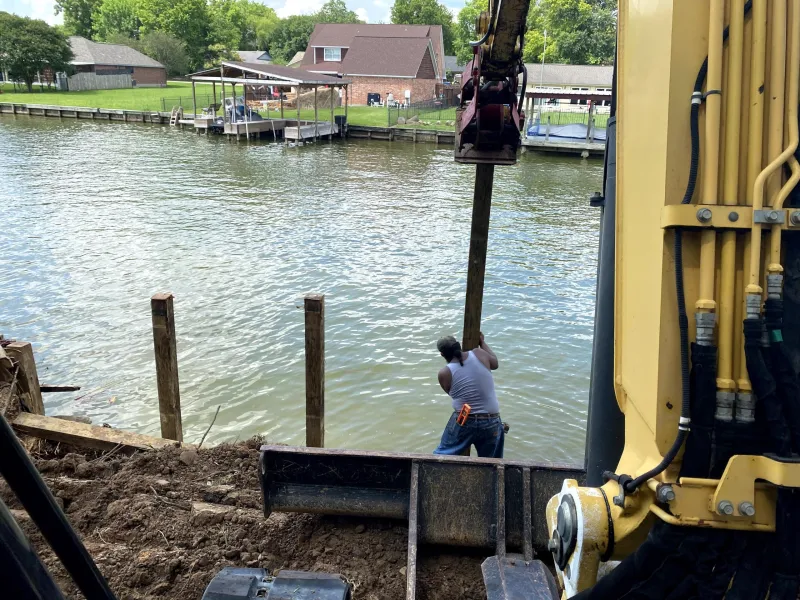
Photo: inspector examining weathered wooden boathouse pilings at lakefront property, via dreamboatdocks.com
In thirty years of lakefront transactions, the deals that went badly rarely failed on price. They failed on paperwork, permits, and pilings — the unglamorous machinery beneath a beautiful shoreline. What follows are the five oversights that most frequently cost lakefront buyers six figures, each with the steps that would have prevented the loss.
1. The Riparian Rights That Weren't
A couple purchasing a $4.2 million home on a Minnesota lake assumed their deeded access to the water included the right to rebuild their dock and launch a boat from their own shore. It did not. The property's frontage was a platted easement, not fee-title riparian land — a distinction worth roughly $700,000 and two years of litigation.
The fix: Order a title commitment and read the legal descriptions with a real estate attorney who works lakefront specifically. Confirm fee ownership to the water's edge or the ordinary high-water mark, and verify any easements, shared accesses, or HOA covenants that could constrain use. Never rely on the listing's description of "private frontage."
2. The Seawall Time Bomb
Steel seawalls on northern lakes have a working life of 30 to 40 years, and many were installed in the 1970s. Replacement runs $400 to $1,000 per linear foot once permits, engineering, and heavy equipment access are factored in — a $150,000 to $400,000 liability hiding behind an attractive stone facade.
The fix: Commission a marine contractor's assessment, not just a general home inspection. Ask for the wall's age, material, and backfill condition in writing, and price remediation into your offer. In states with evolving shoreline regulations, also confirm whether a failing wall can legally be rebuilt at all.
3. The Dock Permit That Doesn't Exist
The showpiece dock — 200 feet of cedar and steel, boat lift, swim platform — is often the property's most photographed feature and its least documented. Docks built beyond size limits, over navigable waters without state permits, or after a riparian dispute can be ordered removed by the new owner.
The fix: Request copies of all DNR, Army Corps, and municipal permits for the dock, lift, and any boathouse. Cross-check footprint dimensions against current regulations. An unpermitted structure is a negotiating lever at best and a demolition order at worst.
4. Flood Zone Creep
FEMA's maps are redrawn, and redrawn again. Properties that sat comfortably outside designated flood zones a decade ago now carry mandatory flood insurance and, in some jurisdictions, restrictions on reconstruction after a major event. A client on an Indiana lake discovered mid-transaction that her lender would require $11,000 a year in flood coverage — enough to reshape the entire deal.
The fix: Pull the current FEMA FIRM panel and any preliminary map revisions, not the seller's decade-old survey. Obtain an elevation certificate, quote actual flood insurance before waiving contingencies, and ask your insurer about the property's loss history.
5. The Pretty but Rotten Boathouse
Nothing dates a lakefront property like a boathouse, and nothing conceals damage like one. Moisture, carpenter ants, and decades of deferred maintenance hide behind fresh stain. One Michigan buyer faced a $285,000 rebuild of a structure the seller had described, accurately but incompletely, as "charming."
The fix: Hire a marine-specialized inspector and demand access to the boathouse substructure, piling, and cribbing. Probe the sill plates. Check electrical for code compliance and insurance insurability — older boathouse wiring is a common carrier red flag.
The Common Thread
Each of these failures shares a root cause: the buyer fell in love with the view and skipped the diligence beneath it. On a lakefront estate, the water is free. Everything standing between the house and the water — the wall, the dock, the title, the permits — is where the six-figure mistakes live. Budget for marine inspection, a riparian attorney, and a week of document review before you fall in love. The lake will still be there when the paperwork is done.