Fortified by Design: How America's Most Discerning Homeowners Are Building Estates That Endure a Changing Climate
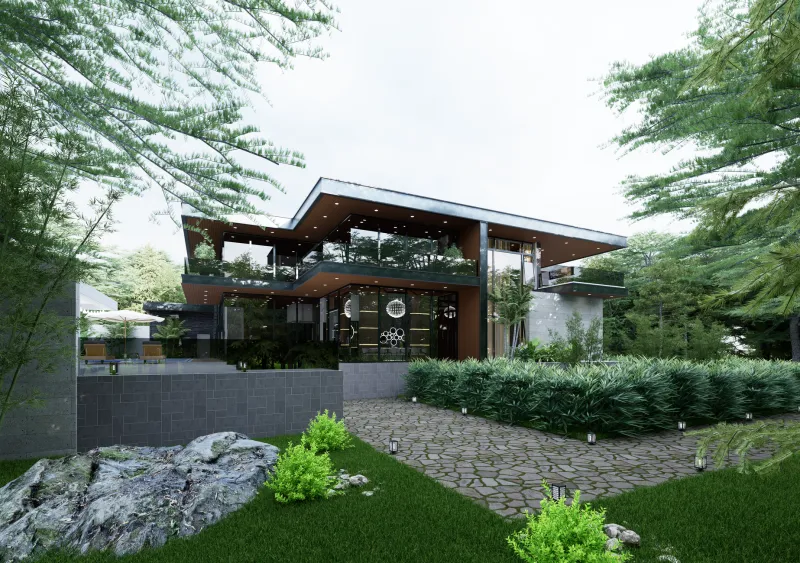
For generations, the hallmarks of a great American estate have remained largely constant: commanding siting, exceptional materials, meticulous craftsmanship, and an enduring sense of place. What has changed, with quiet but unmistakable urgency, is the set of conditions against which those qualities must now be measured. Prolonged drought cycles in the Southwest, intensifying storm seasons along the Gulf and Atlantic coasts, and shifting flood-plain designations across the nation's most prized lakefront corridors have introduced a new variable into the calculus of luxury real estate: environmental resilience.
The most sophisticated homeowners and their architects are responding not with alarm, but with the same deliberate intelligence they bring to every other dimension of estate design. Climate adaptation, in their hands, is not a defensive measure. It is an opportunity to build more thoughtfully, more durably, and ultimately more beautifully.
The Shift From Reactive to Anticipatory Design
For much of the twentieth century, high-end residential construction operated on a relatively stable set of assumptions about weather, water, and land. Flood insurance was a formality. Wildfire buffer zones were a regional afterthought. Air conditioning was a comfort amenity rather than a survival system.
That era has given way to something more demanding. Today, the architects and landscape designers working at the highest levels of the American residential market describe a fundamental reorientation in client conversations. Where discussions once centered almost exclusively on aesthetics and square footage, they now encompass watershed analysis, prevailing wind corridors, soil composition under stress conditions, and the projected behavior of the surrounding landscape over a thirty-year horizon.
This shift is not driven by regulation alone, though building codes in many states are evolving rapidly. It is driven by the recognition, among owners of significant properties, that long-term value preservation requires long-term thinking—and that a residence designed without regard for its environmental future is, by definition, an incomplete investment.
Water as Architecture
Perhaps no element of climate-resilient estate design has attracted more creative attention than water management. In regions ranging from the arid highlands of New Mexico to the flood-prone lowlands of coastal South Carolina, the treatment of water—how it arrives, how it moves, and how it is retained or redirected—has become a central architectural consideration.
At the highest end of the market, this manifests in systems of considerable elegance. Rainwater harvesting infrastructure, once associated primarily with off-grid construction, is now being integrated into the mechanical cores of estates valued well above ten million dollars, designed to be entirely invisible from the interior and indistinguishable from conventional plumbing in daily use. Underground cisterns, precision-graded drainage swales, and permeable hardscape materials combine to create properties that manage stormwater with an efficiency that protects both the home and its surrounding landscape.
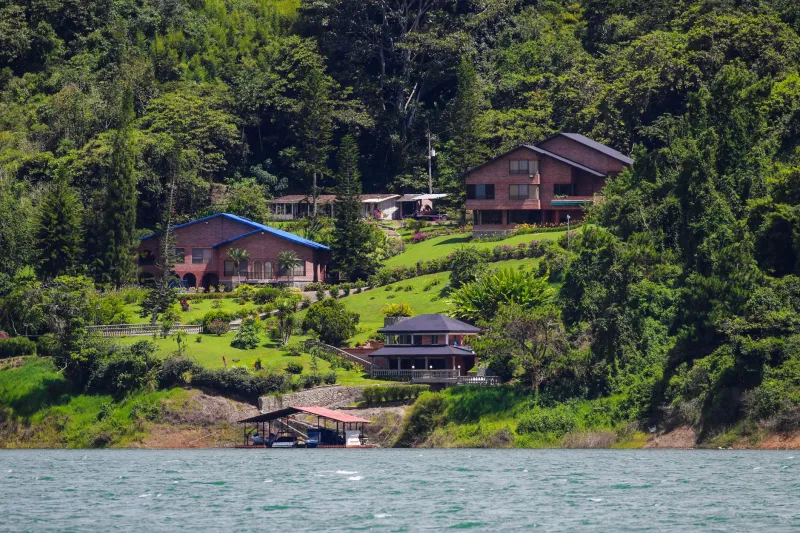
On lakefront estates—properties that occupy a particularly privileged and particularly vulnerable position in the American real estate landscape—water management takes on additional complexity. Shoreline erosion, fluctuating water tables, and the increasing frequency of high-water events demand a level of hydrological literacy that was once the exclusive province of civil engineers. Today, it is a baseline expectation among the landscape architects retained by owners of exceptional waterfront properties.
The most admired solutions are those that address these challenges without announcing them. A riprap shoreline concealed beneath native plantings. A boathouse foundation engineered to accommodate a five-foot variation in lake level. A terrace designed to drain completely within minutes of a heavy rainfall, leaving no trace of the storm that passed. These are the details that define a resilient estate—and that protect its value across decades.
Materials That Endure
The selection of building materials has always been a marker of quality in luxury residential construction. What has changed is the criteria against which that quality is now assessed. Thermal performance, moisture resistance, fire rating, and longevity under environmental stress have joined aesthetic character and provenance as primary considerations.
In wildfire-adjacent regions of California, Colorado, and the Pacific Northwest, Class A fire-rated roofing systems, non-combustible cladding materials, and ember-resistant ventilation assemblies are being specified as standard elements of estate construction—executed in natural stone, fiber cement, and architectural metal that satisfy both the demands of the fire marshal and the expectations of a discerning owner. The result, in the hands of a skilled architect, is a home that reads as timeless rather than fortified.
In coastal and lakefront settings, the emphasis shifts toward materials that resist moisture infiltration, salt exposure, and the cyclical expansion and contraction that humid climates impose on structural assemblies. Engineered hardwoods, closed-cell spray foam insulation, and marine-grade hardware are being specified in residential contexts that would once have relied on conventional alternatives—not because they are fashionable, but because they perform over time in ways that conventional materials cannot.
The underlying logic is straightforward: a residence built from materials chosen for their durability under stress is a residence that maintains its character, its appearance, and its value long after properties of lesser construction have begun to show their age.
Energy Independence as Luxury
Among the wealthiest American homeowners, energy resilience has emerged as one of the more quietly coveted features of contemporary estate design. The ability to operate entirely off the grid during a regional power disruption—to maintain climate control, security systems, refrigeration, and lighting without interruption—is no longer a preoccupation of the survivalist fringe. It is a practical amenity, and in certain markets, a meaningful differentiator.
Whole-home battery storage systems, paired with rooftop or ground-mounted photovoltaic arrays, are being integrated into estates at a scale that was commercially impractical only a decade ago. Propane-backed generators, long a standard feature of high-end rural properties, are being supplemented or replaced by systems that operate silently, produce no emissions, and require no fuel delivery. Geothermal heating and cooling, which draws on the stable thermal mass of the earth below a property's frost line, provides year-round climate control with a mechanical simplicity that appeals to owners who prefer systems that require little maintenance and produce no visible infrastructure.
None of these systems are visible in the finished interior of a well-designed estate. They exist, as all great mechanical systems do, in service of the life lived within.
The Preservation of Long-Term Value
Underlying all of these considerations is a recognition that climate resilience and property value are no longer separable concerns. Appraisers in flood-prone markets are increasingly required to account for flood-zone designations in their valuations. Insurance carriers are withdrawing from or significantly repricing coverage in wildfire and coastal markets, a development that has material consequences for properties that lack demonstrable resilience features. And buyers at the highest levels of the market—those who approach real estate as both a home and an asset—are beginning to ask questions that their predecessors rarely posed.
The estates that will command the greatest premiums in the decades ahead are those whose owners and architects had the foresight to ask those questions first. Properties designed to manage water intelligently, resist environmental stress gracefully, and operate with genuine self-sufficiency will not merely retain their value as conditions evolve. They will appreciate it—because they will represent something that cannot be easily replicated: the intersection of exceptional design and exceptional judgment.
At Villa du Lac, this is precisely the standard to which we hold the properties we represent. An extraordinary residence is not merely beautiful at the moment of its completion. It is built to remain so.