Open Water, Closed Gates: The Quiet Art of Privacy at America's Most Coveted Lake Estates
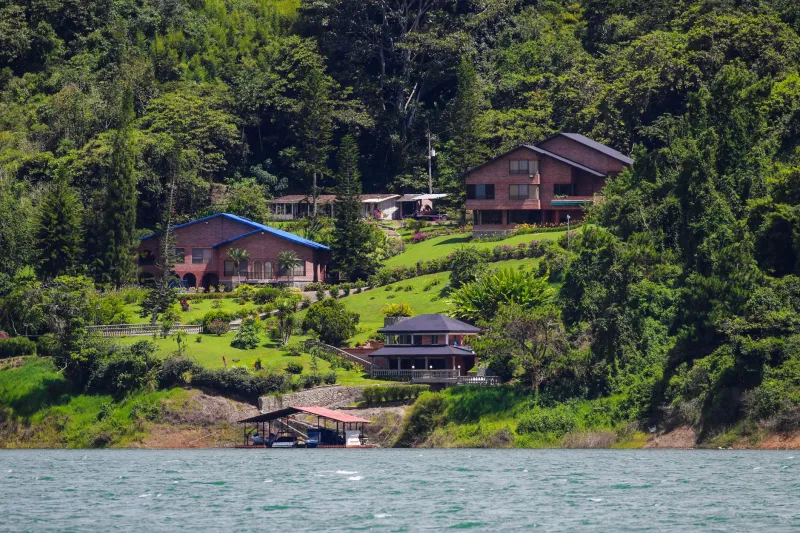
There is an inherent tension at the heart of waterfront living. The lake, by its very nature, is a shared horizon — a surface that connects rather than divides, that invites the gaze rather than deflecting it. For the owner of a premier lakefront estate, this openness is simultaneously the property's greatest asset and its most complex design challenge. How does one fully inhabit the beauty of an open waterscape while maintaining the dignified seclusion that defines true luxury?
Across the most prestigious lake communities in the United States — from the glacial shores of Lake Tahoe to the storied banks of Lake Geneva in Wisconsin, from the vast quietude of Michigan's inland lakes to the manicured edges of North Carolina's Lake Norman — architects, landscape designers, and security consultants are collaborating with increasing sophistication to answer precisely that question. The solutions they have arrived at are neither obvious nor heavy-handed. They are, in the best tradition of elevated residential design, almost entirely invisible.
The Paradox of the Open Shore
Unlike a traditional estate set behind hedgerows and gated drives, a lakefront property faces its most significant exposure from the water itself. Boat traffic, kayakers, and curious passersby on the lake's surface can observe a waterfront home from angles that no conventional security measure adequately addresses. The property line, in a legal and practical sense, ends at the water's edge — and yet the visual boundary must extend far beyond it.
This is what designers and security professionals have come to call the waterfront privacy paradox: the very feature that commands a premium price is the feature that demands the most careful management. A home positioned to capture panoramic lake views is, by definition, a home that can be seen from the lake. The challenge, then, is not to eliminate that visibility but to choreograph it — to decide precisely what is seen, from where, and by whom.
Siting as the First Line of Defense
The most effective privacy strategies begin not with fences or cameras, but with the orientation of the structure itself. Accomplished architects working in the luxury lakefront sector consistently emphasize that thoughtful siting — the deliberate placement of a home on its lot relative to neighboring properties, prevailing sight lines, and the arc of the sun — is the foundational privacy tool.
A home angled slightly off-axis from the shoreline, for instance, can dramatically reduce lateral visibility from neighboring docks while preserving unobstructed water views from the primary living spaces. Recessing the main structure behind a gentle rise in the topography, or nestling it among preserved stands of mature trees, creates natural visual buffering that no constructed barrier could replicate with the same grace.
Floor plans, too, are designed with exposure in mind. The most sensitively conceived lake homes position their most private spaces — master suites, family gathering rooms, home offices — toward the rear or upper elevations of the structure, reserving the lakeside façade for curated entertaining areas where a measured degree of visibility is acceptable, even desirable.
Landscaping as Living Architecture
If architectural siting is the foundation, landscape design is the superstructure of waterfront privacy. The finest lake estates in America employ landscape architects who approach their work with the same rigor as the building's designer, creating layered plant compositions that function as dynamic, living screens.
Native species are favored not only for their ecological appropriateness but for their density and growth habits. In the upper Midwest, stands of white pine and northern white cedar provide year-round screening that is both visually natural and practically effective. Along southern lakefronts, live oaks and dense ornamental grasses create layered buffers that move with the wind and change with the seasons, offering privacy that feels organic rather than imposed.
Critically, these plantings are designed to screen without blocking — a distinction that separates the merely functional from the genuinely artful. The goal is not to wall off the lake but to frame it, to create a sense of enclosure within the property that renders the broader water view a composed picture rather than a transparent exposure.
Beyond permanent plantings, many estates incorporate retractable pergolas, motorized shade structures, and strategically positioned boathouses that serve dual purposes: they are functional lakefront amenities that also define and enclose the property's water-facing edge.
Security That Disappears
Modern security integration at the luxury level has undergone a quiet revolution. The gate-and-guard-house model, long associated with gated communities and institutional campuses, has given way to something far more refined — and far more effective. Today's premier lake estates employ layered security systems that are deliberately designed to be imperceptible to guests and invisible to the casual observer.
Underwater perimeter sensors, discreetly anchored along a property's shoreline boundary, can detect watercraft approaching within a defined radius and alert homeowners through integrated smart-home platforms without triggering any visible alarm. Above the waterline, camera systems are concealed within architectural elements — integrated into rooflines, embedded in dock structures, housed within custom-fabricated landscape lighting — so that surveillance is comprehensive without being conspicuous.
Lighting design plays a particularly nuanced role. Properly executed lakefront lighting creates warm, welcoming zones of visibility within the property while simultaneously reducing the effectiveness of outside observation. A well-lit terrace, seen from the water at night, reveals exactly what the homeowner intends to reveal — and obscures everything else in the surrounding darkness.
Access control at the water's edge is managed with equal care. Private docks are increasingly equipped with keypad or biometric entry systems, retractable dock sections, and automated lighting that activates only upon authorized approach. The lake, in this sense, becomes a managed threshold rather than an open invitation.
The Human Element
No system of design or technology fully replaces the importance of community context. The most genuinely private lake estates in America tend to exist within communities that share a collective commitment to discretion — where neighbors understand and respect the unwritten codes of lakefront etiquette, where local regulations govern boat traffic and noise, and where the community itself functions as an additional layer of protective culture.
Purchasing within an established, deed-restricted lake community — rather than on a publicly accessible body of water — remains one of the most reliable privacy investments a discerning buyer can make. The physical attributes of the property matter enormously, but the character of the community surrounding it matters equally.
Privacy as the Ultimate Luxury
In an era when visibility has become currency and public attention a commodity to be cultivated, genuine seclusion has emerged as perhaps the most coveted luxury of all. The finest lake estates in America are not merely homes with beautiful water views; they are carefully engineered environments in which their owners can live fully, move freely, and simply be — unseen, undisturbed, and entirely at ease.
This is the promise that Villa du Lac holds at the center of its philosophy: that exceptional homes do not merely occupy beautiful places. They protect and preserve the lives lived within them. On the water's edge, where the world seems both closer and more open, that protection is not a compromise of the view. It is the view, perfected.